Pool Leak Detection in Colorado
Suspect your Colorado pool is losing water? Level Up Leak Detection uses LeakTronics™ technology to find the exact source — no draining, no digging. Serving Denver, Aurora, Lakewood, Highlands Ranch, Boulder, and the entire Front Range. Fast scheduling and 24-hour reports.
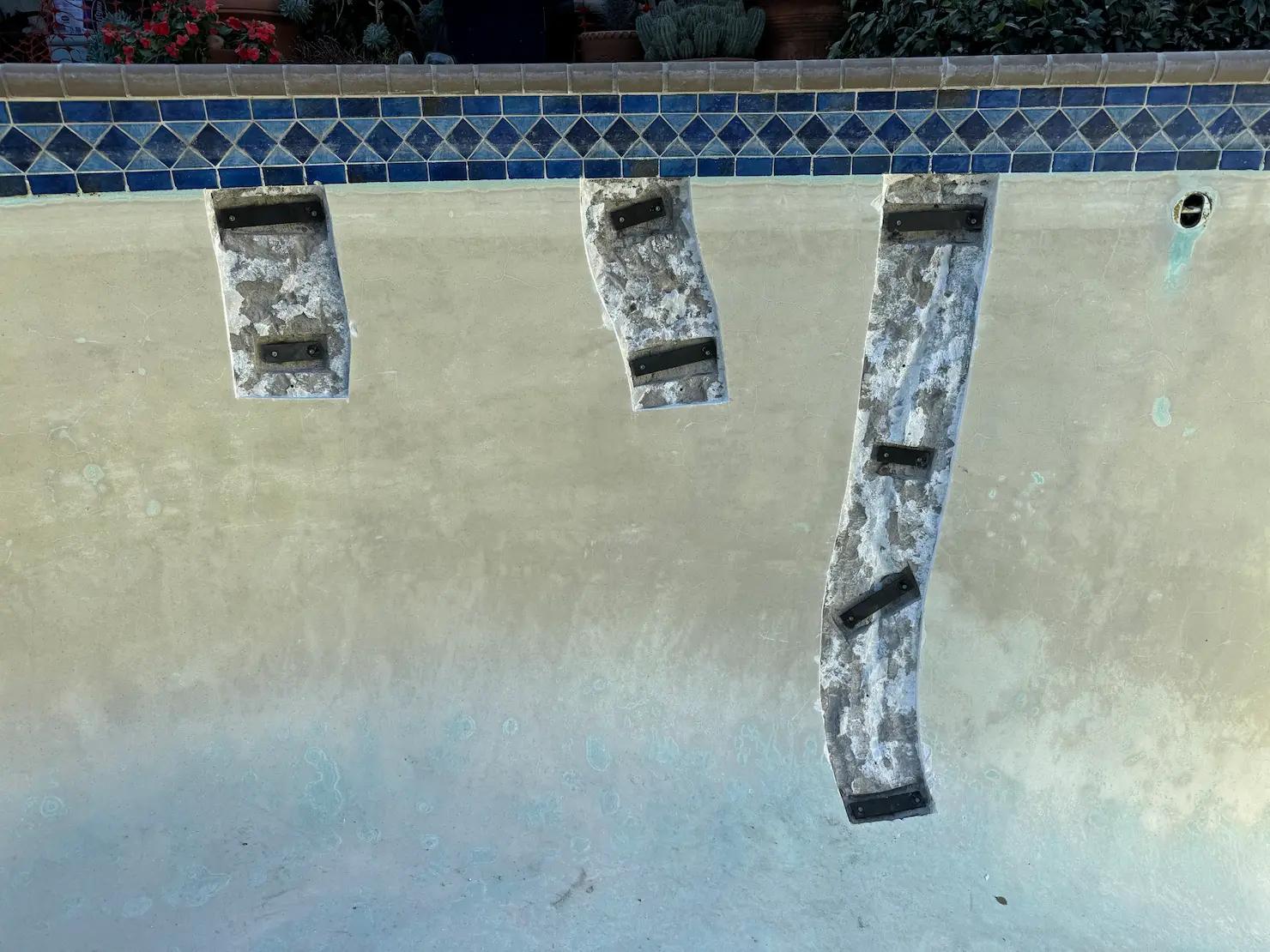
A leaking pool along Colorado's Front Range is fighting you on multiple fronts. Escaping water feeds the bentonite clay surrounding your pool, causing it to swell and push against the shell with enormous force. When the clay dries — which it does aggressively in Colorado's semi-arid climate — it shrinks back and pulls away, leaving voids. Meanwhile, the water that infiltrated cracks and fittings freezes and thaws as many as 150 times per year along the Front Range, widening every failure point with relentless daily cycling. A small leak in Colorado doesn't stay small for long.
Why Colorado Pools Leak Differently Than Anywhere Else
The Front Range creates a combination of pool stresses that no other market in the country experiences simultaneously. Understanding these forces explains why Colorado pools require specialized diagnostic expertise.
150+ Freeze-Thaw Cycles Per Year — Unlike the Midwest where the ground freezes and stays frozen, Colorado's warm winter afternoons followed by sub-freezing nights create rapid daily cycling. Water in cracks, joints, and fittings may freeze and thaw every 24 hours for weeks at a time. This rapid repetition drives ice-expansion damage faster than sustained cold-climate freezing — producing more cumulative damage per winter than cities with far lower average temperatures.
Bentonite Clay Expansion — Colorado's Front Range sits on some of the most expansive clay soil in North America. Bentonite swells up to 15 times its dry volume when saturated — dramatically more than the glacial clays found in Ohio or the red clay of Georgia. Colorado's feast-or-famine moisture cycle — long dry periods interrupted by sudden spring snowstorms, summer monsoon bursts, and irrigation runoff — creates violent swelling-and-shrinking events rather than gradual seasonal transitions.
High-Altitude UV Degradation — At 5,280 feet in Denver and higher in the foothills, UV radiation is 25% more intense than at sea level. This accelerates degradation of every exposed pool component — gaskets, O-rings, sealants, plastic fittings, equipment housings, and pool surfaces. Components that last a decade at sea level may fail in seven or eight years on the Front Range.
Arid Climate With Sudden Moisture Events — Colorado's base climate is dry. Pool owners water their landscapes, creating localized moisture islands around pools surrounded by dry soil. This differential moisture creates uneven clay behavior — the soil immediately around the pool may be swelling while soil a few feet away remains contracted. When a monsoon storm or heavy snowmelt hits, the entire soil profile floods simultaneously, creating rapid uniform swelling against the pool shell.
Our LeakTronics™ Detection Process
Level Up uses the most advanced leak detection technology in the industry. Our Colorado-calibrated process covers every potential failure point:
Plumbing Pressure Testing — The suspect line is isolated and tested on its own. If the plumbing is the likely source, we isolate and test only the suspect circuit, whether that is a supply line, return line, main drain, skimmer line, spa line, or water feature plumbing. Colorado's extreme freeze-thaw cycling makes underground plumbing failures especially common — pipes that survived sustained Midwest cold can crack under the Front Range's rapid daily temperature swings.
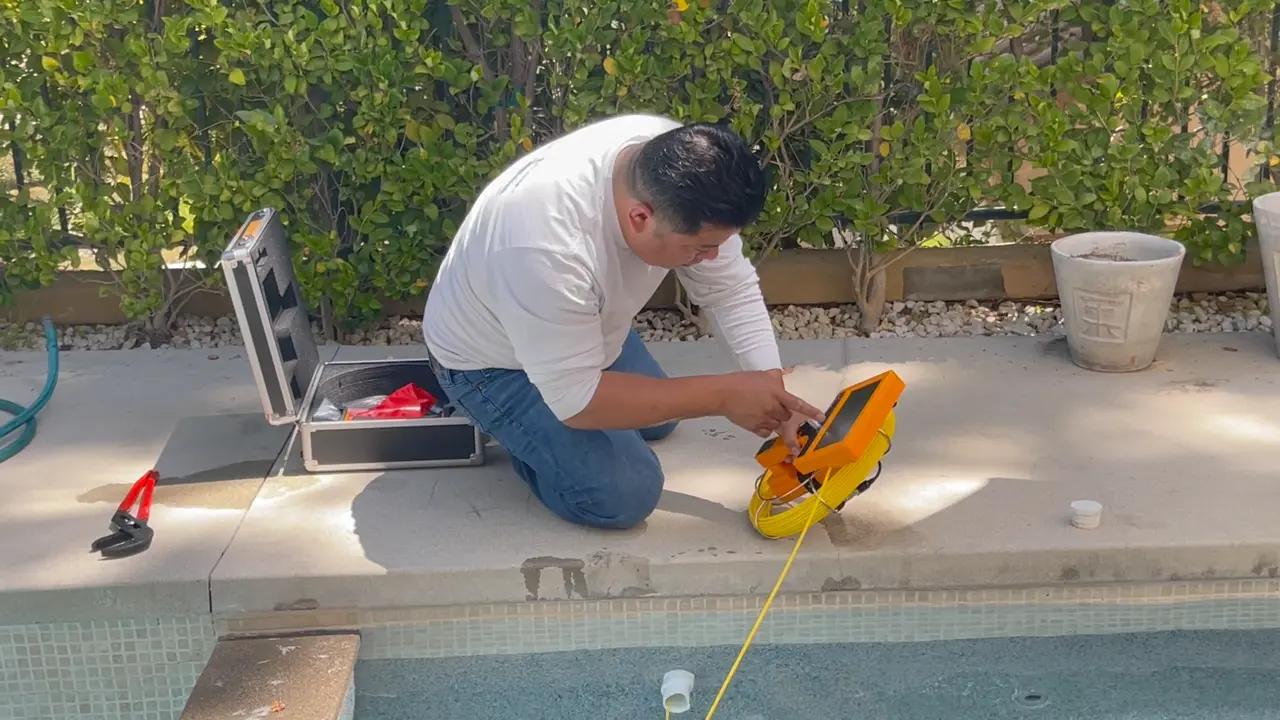
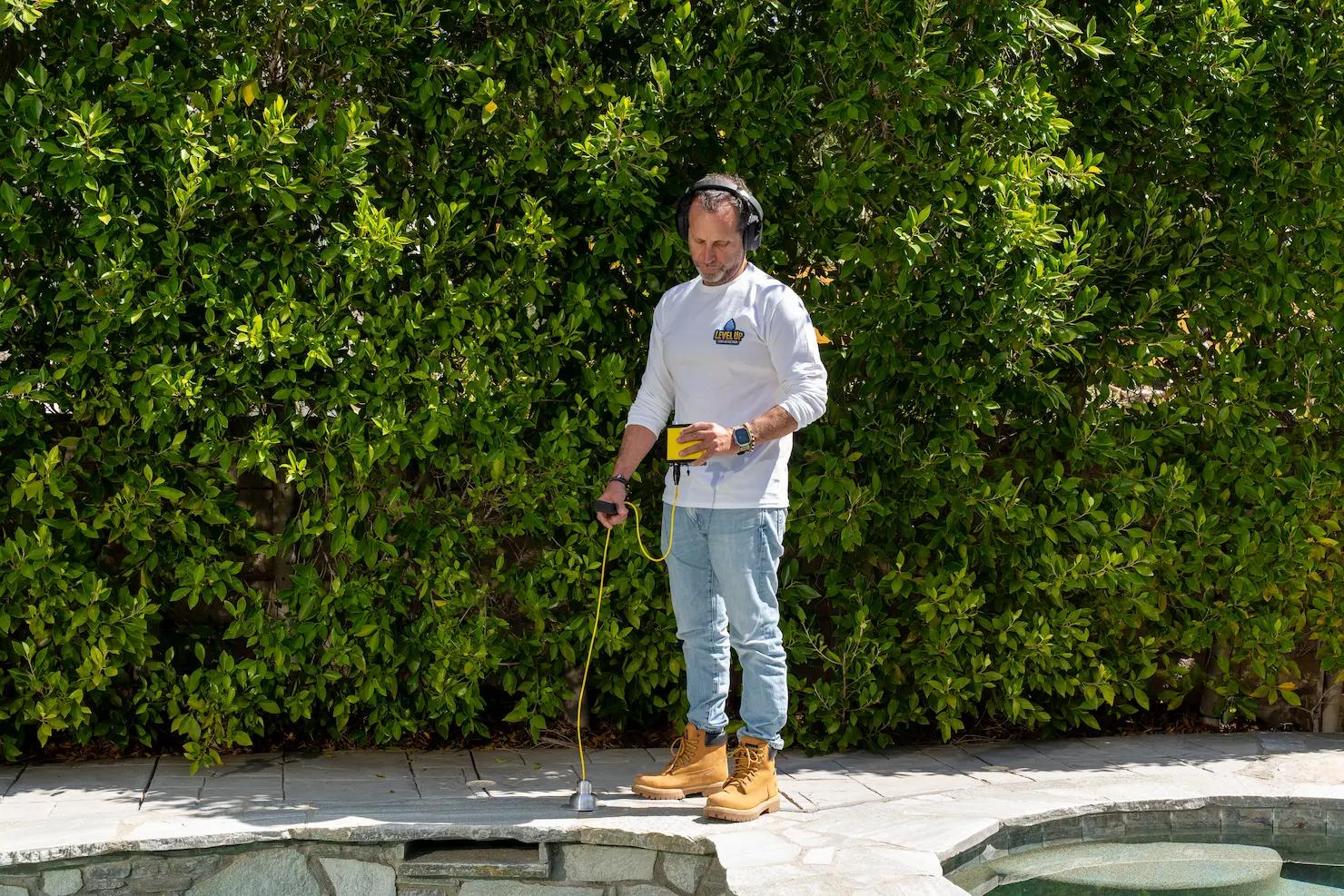
Electronic Shell Scanning — Our LeakTronics™ hydrophones detect the acoustic signature of water escaping through the pool shell. Cracks from bentonite clay movement, freeze-thaw surface damage, and separation at beam lines all produce identifiable sounds that we locate with precision. We scan walls, floor, benches, steps, sun shelves, and all built-in features.
Fitting and Penetration Testing — Every skimmer, return jet, main drain, light niche, spa jet, and water feature connection gets individual attention. Colorado's daily freeze-thaw cycling at altitude is devastating to fittings — the junction between different materials expands and contracts on a 24-hour cycle for months, fatiguing seals and gaskets far faster than seasonal freezing.
Equipment Pad Evaluation — Pump connections, filter unions, heater ports, salt cell fittings, and automation valves are inspected. High-altitude UV has likely been degrading plastic housings and O-rings since installation, and freeze damage from inadequate winterization is common.
Your pool stays full throughout. No draining, no digging. Two to three hours for definitive answers.
When Colorado Pool Owners Should Call
Spring opening — Colorado's compressed season (late May through mid-September) means you need your pool ready fast. If water levels dropped more than expected over winter, or you see new cracks or surface damage, schedule detection immediately. Five months of daily freeze-thaw may have opened failures that weren't present at closing.
Mid-season water loss — Adding water more than once a week, wet spots in the yard, rising water bills, difficulty maintaining chemistry, air bubbles in returns, or expanding deck cracks all warrant professional detection.
Pre-winterization — Finding and repairing leaks before closing prevents an entire Colorado winter of damage. A small leak repaired in September costs a fraction of what the same leak costs after 150+ freeze-thaw cycles.
Monsoon season — Colorado's July-August monsoon storms can trigger rapid bentonite swelling that stresses pool structures. If you notice new symptoms after heavy summer rain, the sudden soil movement may have opened a failure point.
Before buying or selling — Pool condition is a significant factor in Front Range real estate. A leak detection report provides documented plumbing integrity data for negotiations.
Your 24-Hour Report
Every Colorado service call includes a comprehensive digital report within 24 hours — findings documented with photos, exact leak location identified, repair costs estimated, and priorities ranked. Level Up backs every detection with our leak-finding guarantee. Schedule today.
Frequently Asked Questions
Answers to the questions Colorado homeowners ask most about pool leak detection.
Talk with a certified leak detection technician. No pressure, just straight answers.
How does LeakTronics™ find leaks without draining?
Electronic hydrophone sensors and pressure testing locate leaks by sound and pressure loss while your pool stays full. Our technology detects water escaping through cracks, plumbing failures, and compromised fittings — pinpointing the exact location without draining or excavation.
Why do Colorado pools leak more than pools in other states?
Three factors combine uniquely on the Front Range. Denver averages 150+ freeze-thaw cycles per year — far more than most cold-climate cities — because warm winter days and cold nights create rapid daily cycling. Bentonite clay swells up to 15 times its dry volume, creating enormous pressure against pool structures. And high-altitude UV degrades seals and fittings 25% faster than sea-level markets. No other region faces all three simultaneously.
What is bentonite clay and why does it matter?
Bentonite is an extremely expansive clay found throughout Colorado's Front Range. It swells dramatically when wet and shrinks aggressively when dry — far more than the clays found in Ohio, Georgia, or Texas. This creates violent ground movement that cracks pool shells, separates plumbing joints, and shifts deck structures.
Can you detect leaks in underground plumbing?
Yes — it's a core capability. When testing is warranted, we isolate and test only the suspect line, confirming the failure without excavation. This is critical in Colorado where bentonite clay makes digging expensive and where freeze-thaw-damaged plumbing is one of our most common findings.
When should I schedule leak detection in Colorado?
Spring opening and pre-winterization are the highest-value windows. We also recommend detection after significant monsoon events that may have triggered rapid clay movement. We schedule within 24-48 hours across the entire Front Range.
Is it worth fixing leaks before closing for winter?
Absolutely. A leak entering Colorado's winter faces 150+ freeze-thaw cycles over five months. Every crack, joint failure, and fitting issue will be dramatically worse by spring. Pre-winterization repair is the single most cost-effective service we offer.
Pool Leak Detection in Colorado
- Pool Leak Detection in Aetna Estates
- Pool Leak Detection in Arvada
- Pool Leak Detection in Aspen Park
- Pool Leak Detection in Bennett
- Pool Leak Detection in Black Hawk
- Pool Leak Detection in Boulder
- Pool Leak Detection in Bow Mar
- Pool Leak Detection in Brighton
- Pool Leak Detection in Broomfield
- Pool Leak Detection in Castle Pines
- Pool Leak Detection in Castle Pines Village
- Pool Leak Detection in Castle Rock
- Pool Leak Detection in Centennial
- Pool Leak Detection in Central City
- Pool Leak Detection in Cherry Hills Village
- Pool Leak Detection in Columbine Valley
- Pool Leak Detection in Commerce City
- Pool Leak Detection in Conifer
- Pool Leak Detection in Dacono
- Pool Leak Detection in Del Camino
- Pool Leak Detection in Denver
- Pool Leak Detection in Derby
- Pool Leak Detection in Edgewater
- Pool Leak Detection in Englewood
- Pool Leak Detection in Erie
- Pool Leak Detection in Evergreen
- Pool Leak Detection in Federal Heights
- Pool Leak Detection in Firestone
- Pool Leak Detection in Fort Lupton
- Pool Leak Detection in Foxfield
- Pool Leak Detection in Frederick
- Pool Leak Detection in Glendale
- Pool Leak Detection in Gold Hill
- Pool Leak Detection in Golden
- Pool Leak Detection in Greenwood Village
- Pool Leak Detection in Gunbarrel
- Pool Leak Detection in Highlands Ranch
- Pool Leak Detection in Holly Hills
- Pool Leak Detection in Hudson
- Pool Leak Detection in Idaho Springs
- Pool Leak Detection in Lafayette
- Pool Leak Detection in Lakeside
- Pool Leak Detection in Lakewood
- Pool Leak Detection in Leyden
- Pool Leak Detection in Littleton
- Pool Leak Detection in Lochbuie
- Pool Leak Detection in Lone Tree
- Pool Leak Detection in Longmont
- Pool Leak Detection in Louisville
- Pool Leak Detection in Morrison
- Pool Leak Detection in Mountain View
- Pool Leak Detection in Niwot
- Pool Leak Detection in Northglenn
- Pool Leak Detection in Parker
- Pool Leak Detection in Roxborough Park
- Pool Leak Detection in Sheridan
- Pool Leak Detection in Sterling Ranch
- Pool Leak Detection in Superior
- Pool Leak Detection in Thornton
- Pool Leak Detection in Watkins
- Pool Leak Detection in West Pleasant View
- Pool Leak Detection in Western Hills
- Pool Leak Detection in Westminster
- Pool Leak Detection in Wheat Ridge
- Pool Leak Detection in Zuni
How It Works
Schedule
Contact us via phone or online form. We'll set up a convenient time for your inspection.
Detect
Our certified technicians use specialized equipment to locate the leak source and deliver a detailed leak detection report.
Repair
After your leak detection report is delivered, we will provide an estimate for any recommended repairs.
What Colorado Customers Say
Need Pool Leak Detection in Colorado?
Schedule your inspection today and get answers fast.
Thanks — we've got it!
A local leak specialist will reach out shortly.
Need help right away?Call us now
Other Services in Colorado
We offer a full range of pool leak detection and repair services.