If your swimming pool is losing water, you may have heard the term "pressure test." Maybe a pool care company brought it up. Maybe you read about it online. Either way, you want to know what it means. You want to know when it is needed. And you want to know if your pool plumbing really requires it.
At Level Up Leak Detection, our certified technicians serve pool owners across five U.S. territories. We work in Colorado, Columbus OH, Pasco County, North Atlanta, and North Austin. We use LeakTronics™ acoustic tools to find leaks fast. And here is what most companies will not tell you: a pressure test is not always the first step. In many cases, our team can find and pinpoint a leak by sound alone. No need to pressurize the system right away.
Let's break down what you need to know about how to pressure test pool lines. We will cover how it compares to acoustic leak detection. We will also explain when swimming pool pressure testing makes sense for your home.
What Is a Pressure Test for Pool Plumbing?
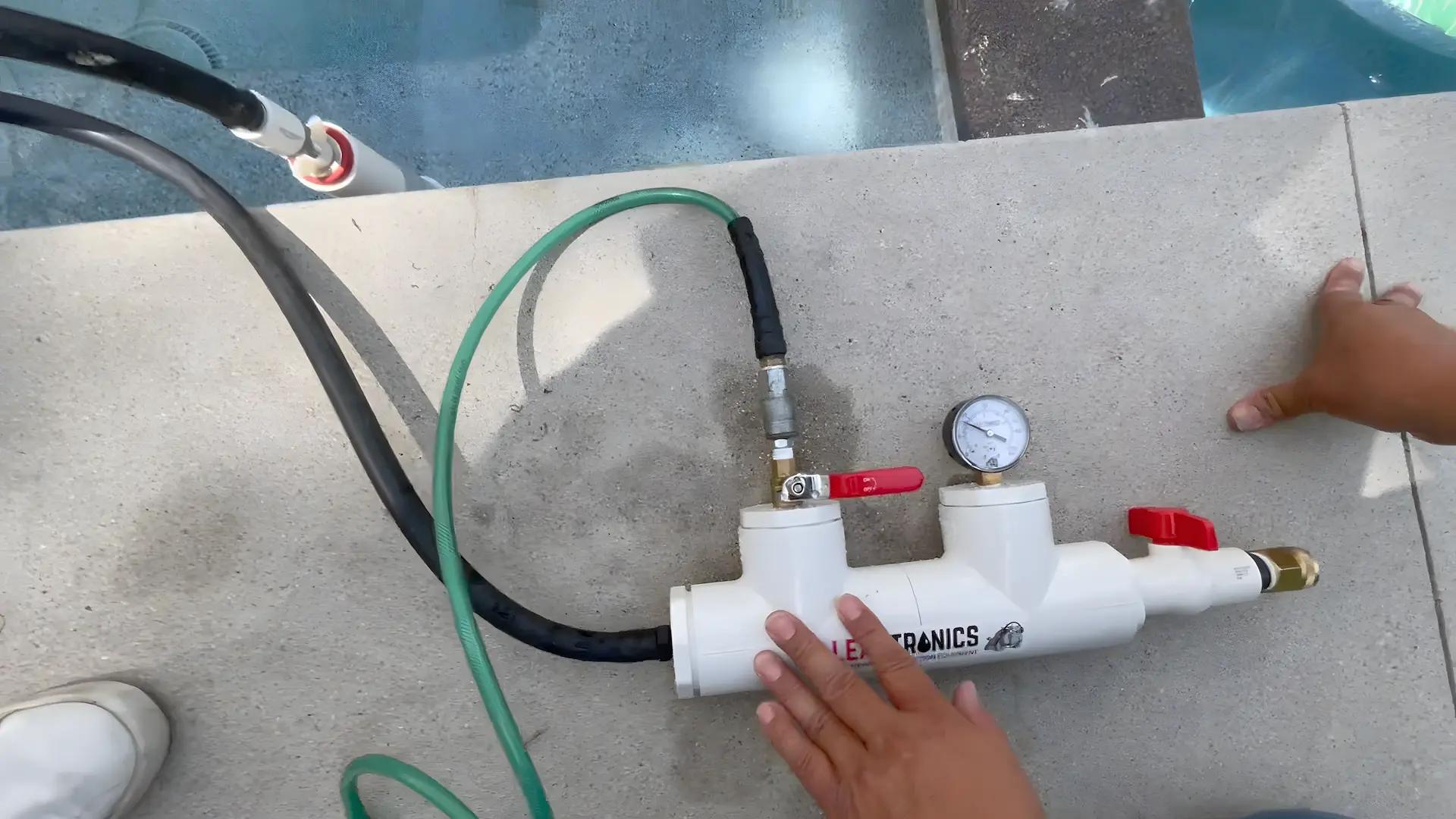
A pressure test is a simple way to check if your pool's plumbing system has a leak. Here is how it works. A technician seals off a section of your pool plumbing with test plugs. Then they push air or water into the pipe using a pressure tester and pressure gauge.
Here is the basic idea. If you pressurize a sealed pipe to a set PSI level and the pressure holds, that line is leak-free. If the gauge shows a pressure drop, there is a leak in that pipe.
Pool pressure testing is one of several tools in a leak detection technician's toolkit. But it is not always the starting point, and it is not always necessary.
How Does Pool Pressure Testing Work? A Step by Step Look
Knowing how a pressure test works helps pool owners feel more at ease. Here is a simple look at how a technician would conduct a pressure test on swimming pool plumbing:
Step 1: Isolate the Plumbing Lines
The technician shuts off pool equipment at the equipment pad. Then they use test plugs to seal off each plumbing line. This could include return lines, suction lines, the skimmer line, or spa plumbing. Each line is tested on its own, line individually if needed.
Step 2: Pressurize the System
Using a pressure tester (also called a manifold), the technician pushes air or water into the sealed pipe. They increase the pressure to a target PSI. For most residential swimming pools, this is between 10-20 PSI. Some may go as high as 25 PSI or 30 PSI based on the pipe type and fitting. Going above 35 PSI is not safe for PVC pool pipes. High pressure can damage joints, fittings, and the plumbing system.
Step 3: Monitor the Pressure
Once the line holds pressure, the technician watches the pressure gauge. A steady reading means the line is good and leak-free. A slow or fast pressure loss means there is a leak. Even a small drop in pressure can signal a problem. The technician also watches for air temp shifts. A temperature change can slightly change the readings in pressurized systems.
Step 4: Diagnose and Isolate the Leak
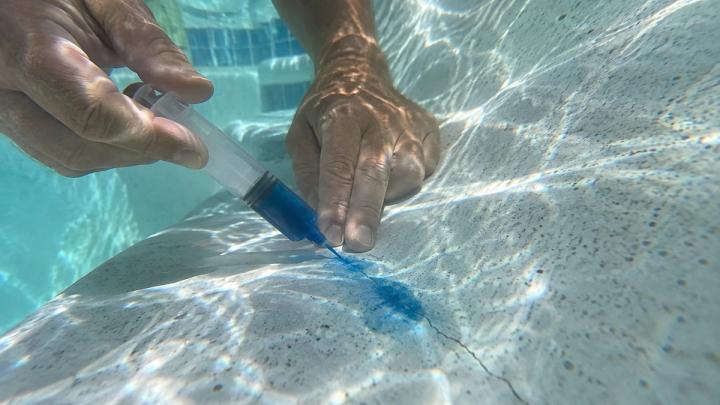
If the gauge shows a pressure drop, the technician knows that line has a leak. From there, they may use other methods. They might listen with acoustic tools. They could apply soapy water to exposed joints and fittings to look for a bubble. Or they may use dye testing to narrow down the spot. The goal is to isolate where the leak is so repairs hit the right spot.
When Is Pressure Testing Necessary for Swimming Pool Plumbing?
Not every pool leak needs a pressure test. Many leaks can be found without one. At Level Up Leak Detection, our team starts with acoustic leak detection using LeakTronics™ tools. This lets us listen for the sound of water escaping through cracks, joints, or damaged pipe. We can do this without needing to plug, pressurize, or disrupt your pool system.
So when does a pressure test become necessary? Here are a few common scenarios:
- The leak is in the underground plumbing lines and sound alone can not find the exact spot
- Many plumbing lines need testing to find out which pipe is leaking
- A new pool or replumbed pool needs to be checked. All joints, fittings, and thread connections must be sealed tight.
- You want to test your pool's plumbing system after a repair to confirm it is leak-free
- The leak is very small, making it hard to detect with sound alone
In most cases, our team finds the leak with acoustic tools first. We only conduct a pressure test when we need more data. This saves pool owners time and avoids extra cost.
Acoustic Leak Detection vs. Pressure Testing: What is the Difference?
Pool owners often ask which method is better. The truth is, they serve different roles and work best when used together as needed.
At Level Up, we lead with acoustic detection. It is faster, less messy, and very accurate. We only conduct a pressure test when it is truly needed. This saves pool owners time and avoids additional cost.
Can You Build Your Own Pressure Tester? Should You DIY?
Some pool owners want to test their own plumbing. You might wonder if you can build your own pressure testing setup at home. You can buy a pressure gauge, test plugs, a reducer, an adapter, and basic fittings. Then you would use water or air to pressurize the line and watch the gauge.
However, there are important reasons to leave this to a professional plumber or leak detection technician:
- Safety gear is essential. Pressurized systems can be dangerous. A plug blowing out under high pressure can cause serious injury.
- Knowing what PSI to use matters. Too little (5 PSI or 10 PSI) may not reveal a small leak. Too much (above 35 PSI) can crack PVC pipe, blow out joints, or damage the valve and fitting connections. Many pros use equipment from brands like Anderson Manufacturing for reliable thread connections and adapters.
- Reading the results takes experience. A slight pressure drop could mean a leak. Or it could mean a temperature change affected the reading. Once you have pressurized the system, a trained technician knows what the gauge is really telling them.
- You could cause more damage. Over-pressurizing can turn a small leak into a bigger problem. This is especially true around the pool deck where buried plumbing lines would flex under stress.
If you want to test your pool's plumbing system, calling a certified leak detection technician is the safest and most accurate option.
What Happens After Pressure Testing Your Pool?
Once the pressure test shows a leak, the next step is finding the exact spot and planning the repair. At Level Up Leak Detection, we give you a clear report. It shows the leak location, what line is affected, and what we suggest for repair.
Based on the leak type and spot, repairs may include:
- Torque Lock staples for cracks in the pool shell or around the pool
- Pipepoxy (Pipe Poxy) trenchless pipe repair for underground lines. No need to trench through your yard or pool deck.
- Joint and fitting repairs where connections have failed or come loose
- Tighten or replace a valve or fitting that is causing a slow drip
Our goal is to fix leaks with lasting results. We want to protect your pool system and keep your swimming pool plumbing in top shape.
Level Up Leak Detection Serves Pool Owners Across 5 U.S. Territories
Whether your swimming pool needs leak detection, a pressure test, or a full pool inspection, Level Up Leak Detection has certified technicians ready to help. We proudly serve pool owners in five growing U.S. markets:
Every territory uses LeakTronics™ tools. Our team has over 30 years of experience. Our technicians diagnose pool leaks with acoustic methods first. They only use pressure testing when it is truly needed. This means less mess, faster answers, and no guesswork for pool owners.
Do Not Wait for Water Loss to Get Worse
A leaking pool does not fix itself. Each day a leak goes undetected, you lose water. You waste money on your water bill. You risk damage around the pool and pool deck. Whether the issue is in your plumbing lines, pool shell, skimmer, or spa, Level Up Leak Detection can help.
We find your leak. Guaranteed.
Call Level Up Leak Detection today at (866) 420-5383 or visit levelupleakdetection.com/locations to find your nearest territory and schedule your pool leak inspection.