Is your pool losing water? It is one of the most common worries for any pool owner. You fill the pool, and a few days later the water level has dropped again. Is it just evaporation, or do you have a real leak in your pool?
The good news is there are simple ways to find out. In this post, we will show you how to detect whether your swimming pool has a leak. We will cover the famous bucket test for pool leaks, walk you through other DIY checks, and explain when it is time to call a professional pool leak detection team.
At Level Up Leak Detection, we help pool owners across the U.S. to find and fix leaks fast. Whether you are in Colorado, Columbus OH, Pasco County, North Atlanta, or North Austin, our certified technicians use LeakTronics™ acoustic technology to pinpoint leaks without draining, digging, or guesswork.
Let's start with the basics.
Why Is My Pool Losing Water?
Before you panic, it helps to understand the most common reasons a pool loses water. Not every drop of water loss means you have a leak. Here are the usual suspects:
- Evaporation. Every pool loses water to evaporation. In hot, dry climates, you can lose up to a quarter inch per day. Factors like temperature, humidity, wind, and direct sun all affect the evaporation rate.
- Splash out. Active swimmers, kids playing, and cannonball contests all splash water out of the pool. This is normal and adds up over time.
- Backwash. If you backwash your filter, you send water out of the system. This is expected but easy to forget when tracking water level changes.
- A real leak. If none of the above explain your water loss, you may have a leak in the pool shell, plumbing, equipment, skimmer, or fittings.
The key question is: how much water is your pool actually losing? And is that loss due to evaporation or something more serious? That is where the bucket test comes in.
The Bucket Test: An Easy Way to Find a Pool Leak
The bucket test is an easy, free way to determine if your pool is leaking or just losing water to evaporation. This test is an easy way to compare evaporation in a controlled bucket to the water loss in your pool. If the pool loses more water than the bucket, the extra loss is likely from a leak.
Here is how to do it step by step:
Step 1: Turn Off Your Autofill
If your pool has an autofill valve or automatic fill device, turn it off. You need to see the natural water level drop without anything adding water back in. If you leave the autofill running, the test will not work.
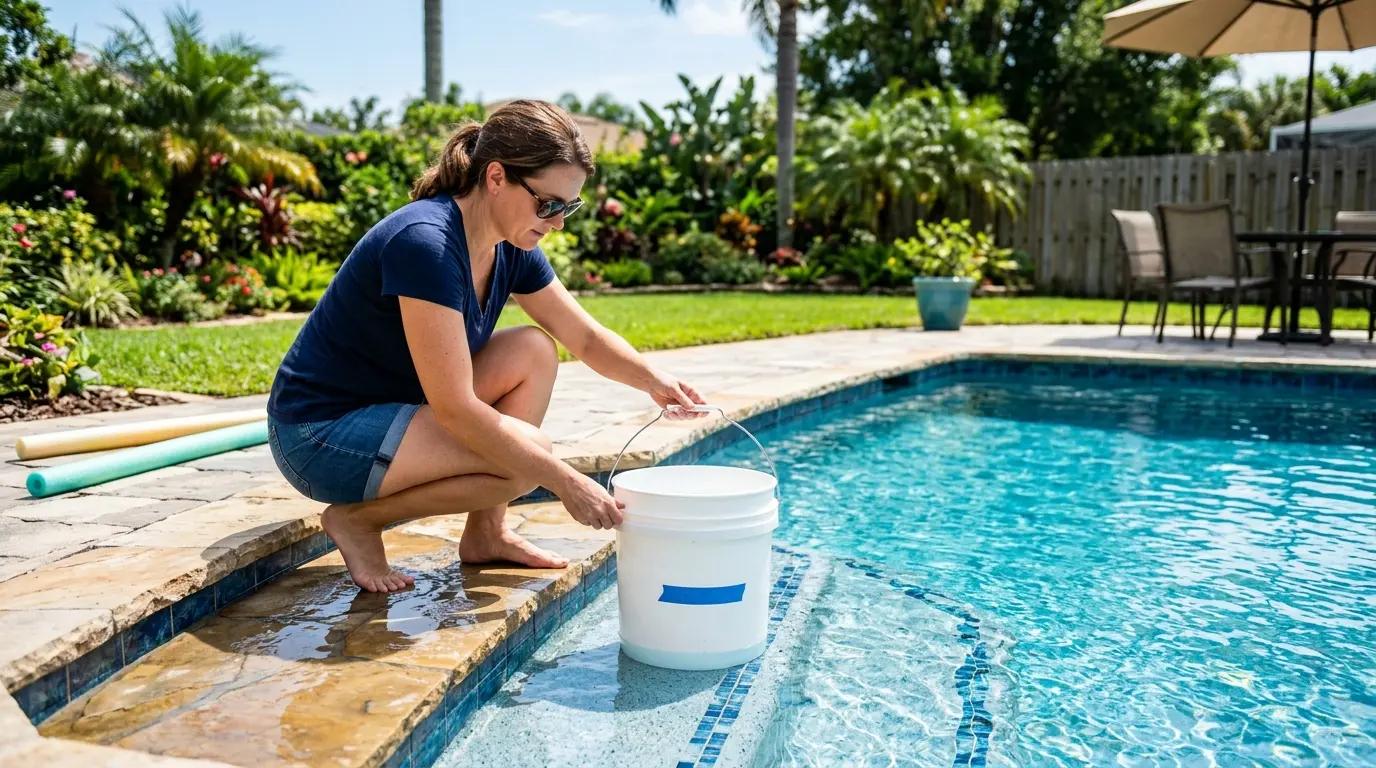
Step 2: Fill a Bucket and Place It on the Top Step of the Pool
Grab a 5-gallon bucket and fill it with pool water. Set it on the top step of your pool so that the bucket sits in the water but does not float away. The water in the bucket and the pool water should be at roughly the same temperature. This keeps the evaporation rate equal for both.
Step 3: Mark Both Water Levels
Use a piece of tape or a marker to mark the water level inside the bucket. Then mark the water level in the pool on the outside of the bucket. Make sure both marks are clear and easy to read.
Step 4: Wait 24 Hours
Leave the bucket in place for a full 24 hours. Do not swim in the pool. Do not add water. Do not run the pool pump if possible. You want the pool to sit still so the test is accurate.
Step 5: Compare the Two Levels
After 24 hours, check both marks. Compare the water level in the pool to the water in the bucket.
- If both dropped the same amount: Your water loss is due to evaporation. No leak.
- If the pool level is lower than the bucket level: Your pool is losing more water than evaporation alone explains. This indicates a leak.
You can repeat the test over two or three days to be sure. If the pool level is consistently lower than the bucket, you likely have a leak in your pool.
How Much Water Loss Is Normal vs. a Leak?
This is where many pool owners get confused. Some water loss is completely normal. But how much is too much?
- Normal evaporation: Up to ¼ inch of water per day in hot weather. This changes based on humidity, wind, and water temperature.
- Borderline: ¼ to ½ inch per day. Could be heavy evaporation or a small leak. The bucket test can help you tell the difference.
- Likely a leak: ½ inch to 1 inch of water loss per day. Your pool is losing more water than evaporate alone could explain.
- Serious leak: More than 1 inch per day. If your pool is dropping this fast, you could be losing hundreds of gallons per day. That adds up to massive water bills and potential damage.
If your pool often loses more than half an inch per day, especially during cooler months when the evaporation rate is low, that is a strong sign something is wrong.
Other DIY Ways to Check for a Pool Leak
The bucket test is the go-to method. But there are other things you can check on your own before calling a pool company.
Check for Visible Leaks Around Equipment
Walk around the pool equipment pad. Look at the pump, filter, heater, and all connections. Do you see any dripping, moisture, or corrosion? Even a small drip at a fitting can waste a lot of water over time. Check where pipes connect to the equipment for any signs of water leaks.
Inspect the Pool Shell and Tile
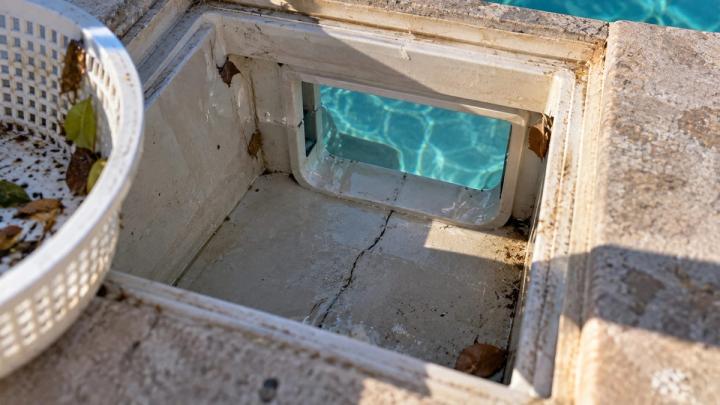
Look closely at the walls and floor of your pool. Check the tile line, any grout or coping joints, and the pool shell surface. Cracks in the shell are a common source of leaks. If you have a vinyl liner pool, look for tears, punctures, or areas where the liner has pulled away from the wall. Even a tiny hole in a vinyl liner can let water escape.
Look for Wet Spots or Standing Water
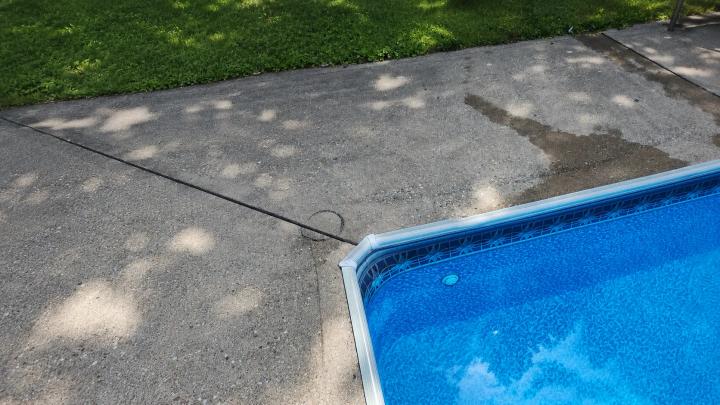
Walk the area around the pool. Check the yard, the deck, and especially areas near underground plumbing lines. If you see standing water, soggy grass, or spots that stay wet even when it has not rained, that could indicate a leak in the plumbing system below.
Try a Dye Test
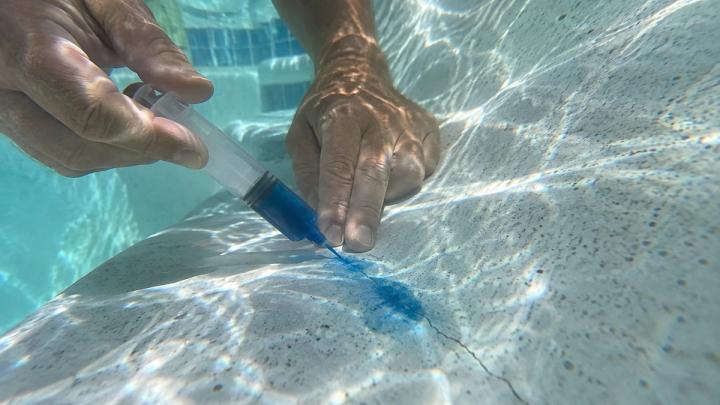
If you suspect a specific spot, you can do a simple dye test. With the pool pump off and the water still, hold a bottle of leak detection dye (or even food coloring) near the suspected crack or fitting. If the dye gets pulled toward the wall or floor, water is escaping at that point. A dye test helps you spot visible leaks that are hard to see with the naked eye.
Monitor the Water Level Over Time
Mark the pool's water level on the skimmer with a piece of tape. Check it every 24 hours for a week. Write down the numbers. If the water level drops by inches of water over a few days and the pattern is consistent, something is going on beyond normal evaporation.
When to Call a Professional Pool Leak Detection Team
DIY checks are great for getting a sense of the problem. But to find the leak with precision, you need the right tools and experience. Here is when it makes sense to call a pro:
- The bucket test confirms your pool is losing water beyond evaporation
- You see cracks, wet spots, or dropping water levels but cannot find the source
- Your water bills keep climbing with no other explanation
- The pool pump loses prime or air bubbles appear in the return jets
- You suspect a leak in underground plumbing that you cannot see or reach
- Your pool has a vinyl liner with a suspected tear that you cannot locate
At Level Up Leak Detection, our certified technicians use LeakTronics™ acoustic technology to find the leak fast. We can detect leaks in the pool shell, plumbing, skimmer, returns, and equipment. Our process is non-invasive. No draining. No digging. We give you a full report with the exact leak location and recommended repair options.
We find your leak. Guaranteed.
What Happens After You Find the Leak?
Once the leak is located, repair is the next step. At Level Up Leak Detection, we offer repair solutions that last:
- Torque Lock structural staples for cracks in the pool shell
- Pipepoxy (Pipe Poxy) trenchless repair for underground pipe leaks. No digging needed.
- Fitting and connection repair for leaks at joints, valves, or equipment
- Vinyl liner patching for tears or punctures in liner pools
The sooner you find and fix a leak, the less damage it does. A pool that is leaking even a small amount can waste thousands of gallons per month. That water saturates the soil, shifts the ground, and can cause the area around the pool to settle or crack over time. As the ground moves and the pool settles, you may also notice chemical imbalances in the water. The constant loss of water dilutes chemical levels, making it harder to keep the pool clean and balanced.
Level Up Leak Detection Serves Pool Owners all over U.S. Territories
No matter where your pool is, Level Up has a team ready to help. We offer pool leak detection, pool inspection, and pool repair across five growing territories. Our technicians are trained to find leaks fast using the best acoustic technology in the business.
Every location uses LeakTronics™ technology and is backed by over 30 years of leak detection experience. We offer leak detection services, inspection, and repair so you get everything handled in one place.
Do Not Let a Leak Drain Your Pool or Your Wallet
If your pool's water level keeps dropping, do not ignore it. A small leak today can turn into a major repair tomorrow. Whether you start with the bucket test at home or go straight to a professional, the most important thing is to act fast.
When your pool is pool filled with water one day and low the next, something indicates a leak that needs attention. The sooner you find it, the sooner you can get back to enjoying your pool.
Call Level Up Leak Detection or visit levelupleakdetection.com/locations to find your nearest territory and schedule your pool leak detection today.