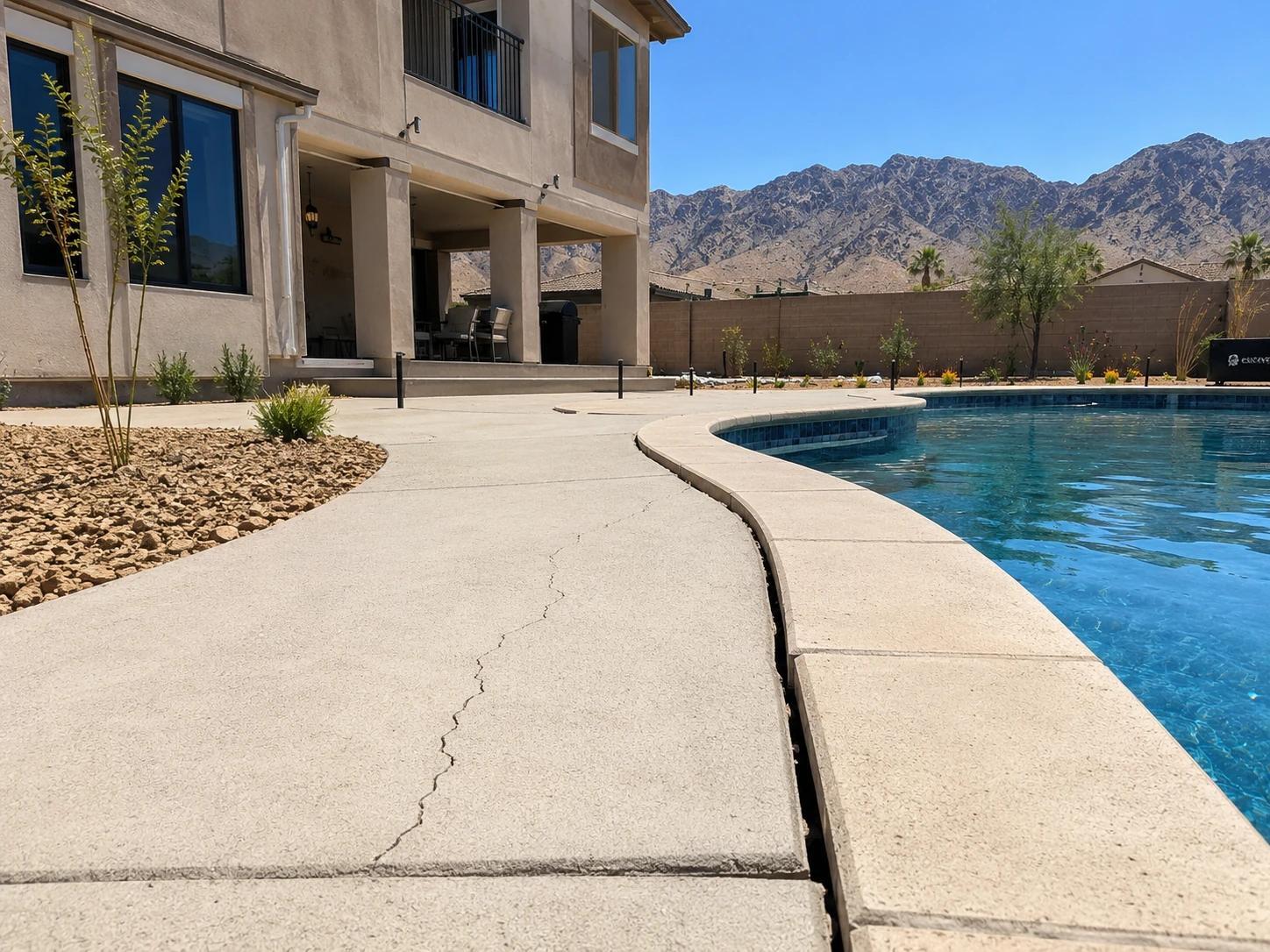
Enterprise is one of the fastest-growing parts of the Las Vegas Valley. New homes and new pools go in fast, often on raw desert ground. That ground is still moving. As the soil settles, newer pools across Enterprise can crack, shift, and leak. This guide walks homeowners through the warning signs, the causes, and how leak detection and repair fix the problem.
Why Newer Enterprise Pools Settle on Raw Desert Soil
A pool is heavy. Tens of thousands of gallons sit on the soil beneath it. When the pool is installed on fresh fill, that fill has not fully packed down yet. Over the first few years, the soil compresses under the weight. The result is settling.
New construction makes this worse. Builders move fast in Enterprise. Sometimes the soil conditions under a lot get loose fill that was not packed tight. Without proper site preparation, that loose fill keeps settling for years. Pre-construction soil testing helps, but not every yard gets it.
The local ground adds its own twist. Much of the valley sits on caliche. Caliche is a hard, cemented layer of calcium-rich soil. A caliche layer can sit right next to soft, loose pockets. So one side of a pool can rest on rock while the other side sinks. That uneven support is a recipe for cracks.
Some yards also have expansive soils. Expansive clay soil swells when wet and shrinks when dry. That shrink and swell cycle moves whatever sits on top. Between loose fill, caliche, and expansive soils, the layers beneath a new pool rarely settle evenly.
How Soil Movement Turns Into Pool Leaks
When the soil moves, the pool moves with it. The downward movement is rarely even. One corner drops more than another. That stress goes straight into the shell.
Here is how settling becomes a leak:
- Voids beneath the pool: As fill compacts, gaps open up. These voids beneath the shell remove soil support, so the pool flexes.
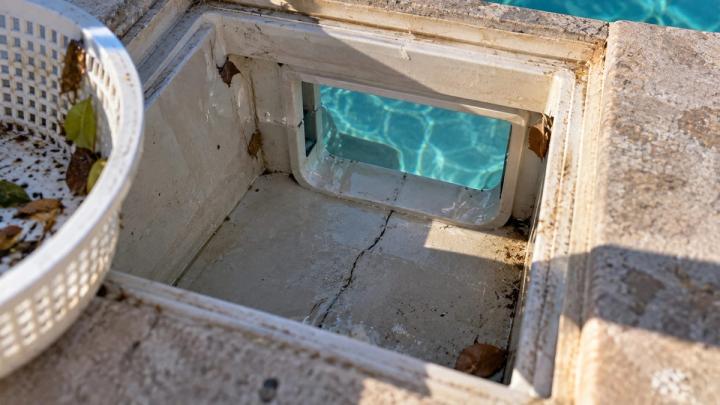
- Cracks in the shell: Without even support, the structure bends. First you get a hairline crack. Then it grows and lets water out.
- Broken plumbing lines: Buried pipes are rigid. When soil particles shift, the plumbing lines get pulled or crushed. Settling soil can squeeze a joint until it cracks. A small break leaks water all day.
- Deck and slab damage: Settling concrete around the pool tilts. You see a cracked slab, a sunken paver, or gaps around the skimmer and equipment pad.
A leak then feeds the problem. Water around the pool softens the soil even more. The soft soil settles further. The settling cracks more pipe. Left alone, the damage continues to worsen.
Warning Signs of Settling-Related Pool Damage
Most Enterprise homeowners spot the surface clues first. Watch for these warning signs around the pool area.
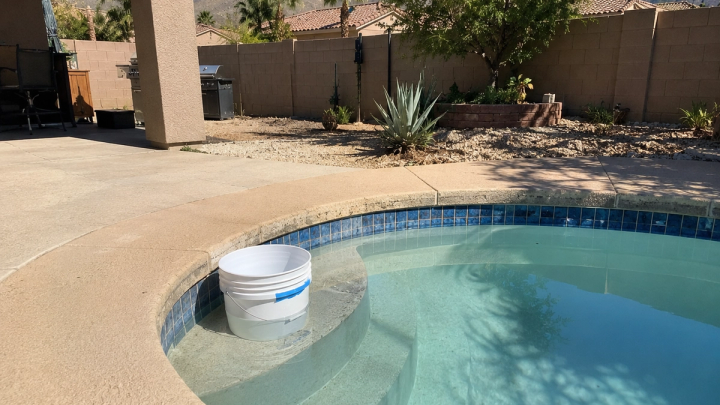
One clue stands out. If your water keeps dropping in cool, calm weather, it is likely a real leak, not normal evaporation. A simple bucket test can help you check. Our guide on how to run a bucket test shows the steps. You can also review the common signs of a pool leak before you call.
What Causes the Soil to Move Beneath Your Pool
Soil moisture drives most of the trouble. The amount of water in the ground changes the soil's size and strength. When moisture levels swing, the soil moves.
A few common triggers:
- Moisture changes: Heavy rainfall, then long dry weather. Wet soil swells. Then the dry weather makes it shrink. This shrinkage opens gaps.
- Poor drainage: When water has nowhere to go, it sits and soaks in. Bad slope sends roof and yard water toward the pool, not away from it.
- Over-watering: A lawn or drip system that runs too long can oversaturate the soil around the pool.
- Soil creep: On any slope, gravity slowly pulls soil downhill. This soil creep nudges the pool over time.
- Soil erosion: Fast water movement washes fine material out from under the deck.
There is a bigger backdrop too. The U.S. Geological Survey defines land subsidence as a gradual settling or sudden sinking of the ground, often tied to groundwater changes and the compaction of soil layers. You can read the federal overview on the USGS Land Subsidence page. The Las Vegas Valley has documented regional subsidence linked to groundwater pumping. For a single backyard pool, though, the main driver is usually local fill settling, not the regional picture.
Leak Detection and Repair for Settling Pools in Enterprise
You do not have to guess where the water goes. Our team uses specialized equipment to find the leak source fast. The process is non-invasive, so we protect your deck and yard.
We listen for water with electronic gear. We run dye tests at suspect cracks. We pressure-test the plumbing to find breaks in buried pipe. This lets us pinpoint the exact spot, then plan the fix. See how our expert pool leak detection in West Las Vegas works on every job.
Once we find the leak, our pool repair team stops the loss. For the soil itself, the fix depends on how bad things are:
- Soil stabilization: We fill the voids and firm up the ground under the pool and deck.
- Polyurethane foam injection: In many cases, we inject expanding foam under a sunken slab. The foam cures fast and lifts the slab back into place.
- Excavation in severe cases: When damage is deep, we dig out and rebuild the soil support and the structure.
This is similar to foundation repair for homes. Pool settling is a form of foundation settlement. The same foundation movement that cracks a house slab can crack a pool. The goal is steady soil support under your foundations and structures, so the cracks stop coming back. If you want a full check first, a professional pool inspection maps the shell, plumbing, and ground in one visit.
How to Prevent Future Settling and Protect Your Pool
Good water control is the best defense. Most prevention and remediation work comes down to keeping moisture content steady.
- Fix drainage so rain and yard water drain away from the pool.
- Set the slope to direct water away from the shell.
- Do not let irrigation oversaturate the soil near the pool.
- Watch the load-bearing capacity of fresh fill on any new build. Ask about pre-construction soil testing.
- Keep an eye on hairline cracks. If a crack widens, the movement continues. If it holds still for months, the movement has stopped.
These steps help prevent future settling and protect your home’s biggest backyard investment. They also keep your pool water where it belongs. Less water around the pool means less soil movement, less downward movement, and fewer leaks.
Our local experts also serve nearby Mountain's Edge and Summerlin, where newer pools face the same desert soil.
Worried About Cracks or Water Loss at Your Enterprise Pool?
Settling-related leaks only get worse with time. The sooner you act, the smaller the repair. Catch it early and you save soil, water, and money.
Call Level Up Leak Detection of West Las Vegas at (725) 425-5708 for fast, flat-rate leak detection. Prefer to start online? Request your free quote, and our certified team will help you stop the loss and protect your pool.