Your water line keeps dropping, and you cannot tell why. In the Mojave heat, that missing water could be normal evaporation, or it could be a real leak. This is the most common concern we hear from pool owners in Centennial Hills. Your backyard pool is a true desert oasis. This comprehensive guide shows you how to tell evaporation from a leak, so you stop losing water and stop guessing.
Why This Is a Common Concern for Las Vegas Pool Owners
A dropping water level worries every pool owner. Vegas pools take a beating from the summer sun, and your swimming pool is no exception. In a dry climate like Las Vegas, the worry is bigger. The same heat that makes your pool feel amazing also pulls a lot of water into the air. So when the water in the pool drops, it is fair to ask: is this evaporation or a leak?
Here is the hard part. Both problems look the same at first. The water level falls. You add more from the tap. The bill creeps up. Across the 702 and 725 area codes, Las Vegas pool owners face the same desert puzzle. Telling water evaporation apart from real water leaks takes a clear method, not a guess.
Evaporation Is a Natural Process in the Las Vegas Heat
Evaporation is a natural process. Heat, dry air, low humidity, and wind all speed it up. Las Vegas has all four. From June to September, evaporation rates climb fast, and your pool water can drop more than an inch on a hot, windy day.
How much water are we talking about? The U.S. Environmental Protection Agency studied this. A typical uncovered pool can lose 12,000 to 31,000 gallons of water a year to evaporation. The exact number depends on the climate. In a hot, dry place, the loss sits near the high end. The EPA also points out that a pool cover can prevent up to 95 percent of pool water evaporation. You can read the federal guidance on the EPA WaterSense Pool Water Efficiency page.
A few signs point to normal evaporation rather than a leak:
- The loss is worse on hot, dry, windy days.
- It slows down when the weather cools.
- Your pool sits uncovered in full sun.
- You run waterfalls or other water features often.
As water evaporates, it leaves minerals behind. That can show up as calcium scale along the waterline and can shift your water quality. Topping off with tap water again and again also changes your water chemistry. None of that proves a leak. It just means the desert is doing what the desert does.
The Bucket Test: A Simple Way to Spot Water Loss
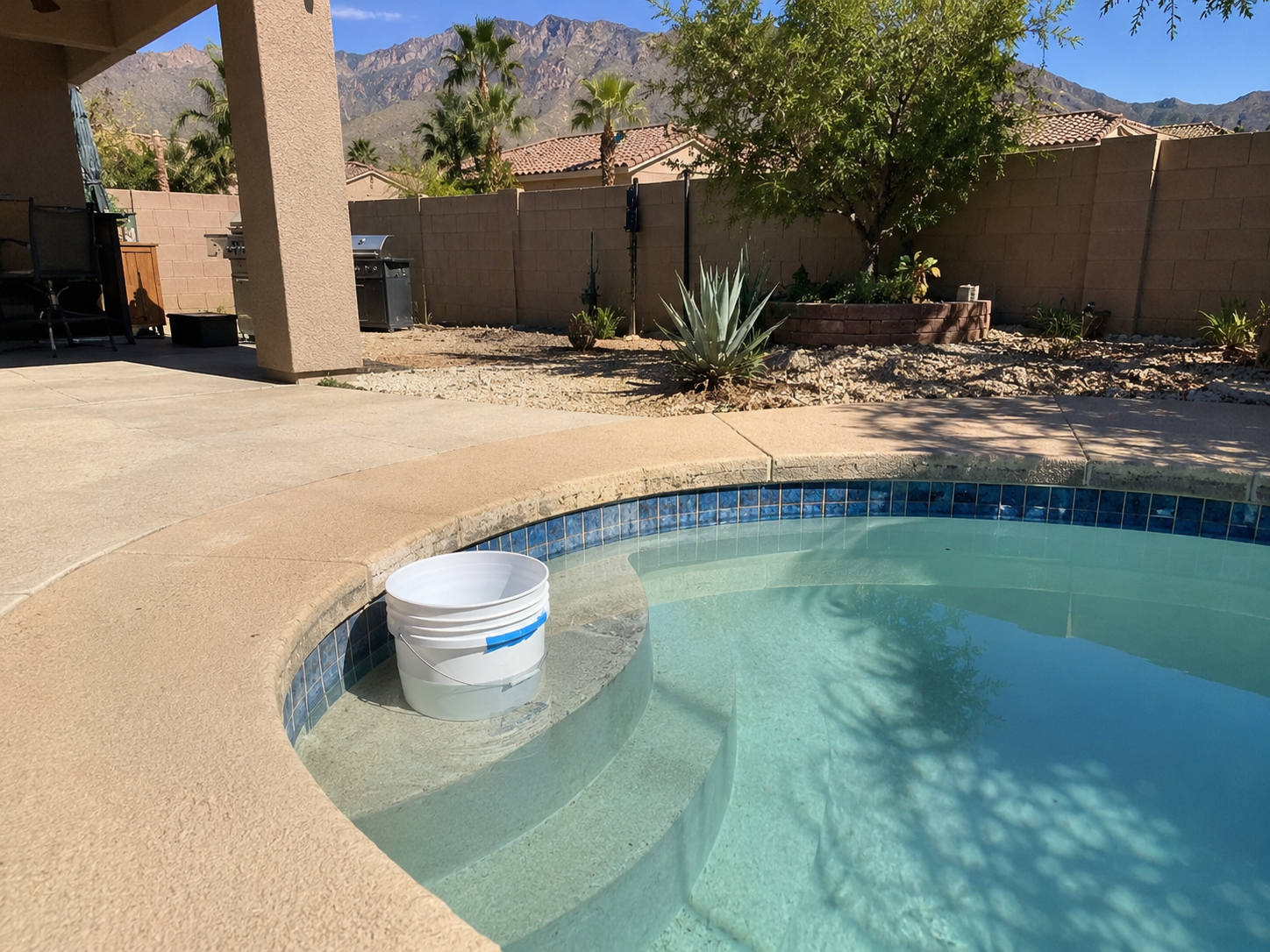
The bucket test is the easiest way to check at home. It compares your pool against a control. The idea is simple. A bucket with pool water can only lose water to evaporation. Your pool can lose water to evaporation plus a leak. So you watch both side by side.
Here is how to run it:
- Fill a 5-gallon bucket with pool water. Leave a few inches of room at the top.
- Set the bucket on a step of your pool so the water inside matches the temperature outside.
- Mark the water level inside the bucket. Then mark the water level on the outside of the bucket, which tracks your pool water level.
- Run the pool normally with the pump running for 24 hours. Do not add water, drain, or swim during the test.
- After 24 hours, compare the bucket and the pool.
Now read the result. If the level on the inside of the bucket dropped about the same as the pool, the loss is behaving like normal evaporation. If the pool dropped more than the bucket, evaporation cannot explain the gap. That gap points to a real leak. If the test comes back messy after wind or rain, run it again for another 24 hours. For a deeper walkthrough, see our step-by-step bucket test guide.
Signs You Have a Real Leak, Not Just Water Evaporation
Some clues point past the weather. When the loss keeps going in mild weather, or the level falls overnight with no wind, evaporation is not the whole story. Watch for these signs of escaping water around your pool structure and pool plumbing.
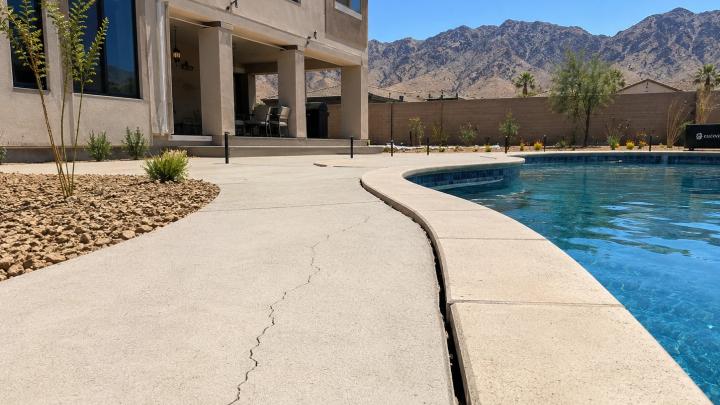
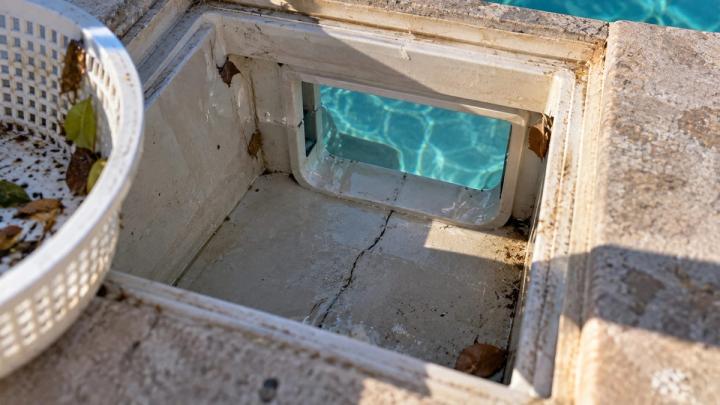
Other red flags include cracks near the skimmer, a main drain that will not hold a level, a constantly wet backwash line, or bubbles in the return jets. These can signal underground leaks that you cannot see from the deck. If you spot two or more, it is time to call for help.
How Professional Pool Leak Detection Pinpoints the Leak Source
A DIY test tells you that you have a problem. It does not tell you where. That is where our professional pool leak detection services come in. Our certified technicians use specialized, non-invasive tools to find the leak source without tearing up your yard.
We start with a full visual check of your pool's surface, the waterline, the skimmer, and the fittings. A lot of trouble hides deeper in the pool’s plumbing. Then we go deeper:
- Electronic listening gear to hear water moving through a crack.
- Dye testing near suspect spots on the pool surface, where a small stream of dye gets pulled into a leak.
- Pressure testing of the pool plumbing to find breaks in return lines and supply pipes.
This non-invasive approach protects your pool equipment, your deck, and your filtration systems. It lets us pinpoint the exact leak, not a rough guess. From there, our repair services fix the problem the right way the first time. If you also want a clean bill of health on the whole system, a full pool inspection checks the shell, plumbing, and gear together. You can compare our process with what works against real water leaks in our guide to expert pool leak detection in West Las Vegas.
Serving Centennial Hills and the West Las Vegas Valley
We are local. We know what desert pools go through across Southern Nevada. From the Kyle Canyon foothills down through the Las Vegas Valley, we help homeowners stop water loss and protect their backyard oasis.
Level Up Leak Detection of West Las Vegas serves Centennial Hills, NV and the wider area, including Summerlin, Spring Valley, Enterprise, Mountain's Edge, North Las Vegas, and out toward Boulder City. Wherever you are in the valley, our professional pool team follows the same best practices on every job.
Still on the fence about evaporation or a leak? Our post on whether your pool is leaking or just evaporating breaks down the basics for owners in Las Vegas and beyond.
Take the First Step Toward Stopping the Water Loss
You do not have to keep watching gallons of water and money disappear into the dry air. Climbing water bills and rising utility bills are not just the cost of owning a pool in the desert. Often, they are a sign worth checking.
Take the first step toward a leak-free pool today. Call our Las Vegas pool leak detection team at (725) 425-5708 for fast, flat-rate leak detection services. Prefer to reach out online? Book your visit on our contact page, and our local experts will help you stop the loss and get back to enjoying your pool.