Every pool owner dreads the thought of a leak. But the truth is, pool leaks are more common than most people think. A small crack in the pool shell, a loose fitting in the plumbing, or a worn seal around the pool equipment can all lead to water loss that adds up fast. The key is catching the early warning signs before a minor issue turns into a costly repair.
Whether you own a swimming pool in Colorado, Ohio, Florida, Georgia, or Texas, knowing the common signs of a pool leak can save you time, money, and stress. A swimming pool leak can start small and grow fast if ignored. In this post, we will walk you through the most common signs of a pool leak, explain how to detect a leak on your own, and show you when it is time to call a professional pool leak detection team like Level Up Leak Detection.
Why Detecting a Pool Leak Early Matters
A leak in your pool might seem small at first. Maybe you notice your pool's water dropping a bit more than usual. Maybe your water bill crept up last month. It is easy to brush these things off. But even a small leak can waste hundreds of gallons of water per day. Over weeks and months, that water loss adds up to real damage.
Here is why leaks early helps protect your pool and your wallet:
- Water waste. A leaking pool can lose one to two inches of water per day. That is thousands of gallons of water per month going to waste.
- Higher bills. All that lost water shows up on your water bill. Many pool owners are shocked when they see how much a hidden leak costs them each month.
- Structural damage. Water escaping from the pool saturates the soil underneath. Over time, this water movement underground can cause the ground to shift. That can lead to structural issues with your pool, your deck, and your yard.
- Chemical imbalance. When you constantly add water to your pool, you dilute the chemicals in your pool. That makes it harder to keep your pool clean and balanced.
The sooner you detect leaks, the sooner you can stop the damage. Let's look at the signs that your pool may have a leak.
Sign #1: Your Pool Is Losing Water Faster Than Normal
This is the most obvious sign of a leak, but it is also the one pool owners most often ignore. Every swimming pool loses some water to evaporation. That is normal. In hot, sunny climates, a pool might lose up to a quarter inch of water per day from evaporation alone.
But if your pool is losing water at a faster rate, something else is going on. If you are adding water to your pool more than once a week, or if you notice your pool's water level dropping by an inch or more in 24 hours, your pool could be losing water due to a leak.
The Bucket Test: A Simple Way to Determine if the Water Loss Is Due to a Leak
Want to test it yourself? Try the bucket test:
- Fill a bucket with pool water and place it on the top step of your pool.
- Mark the water level inside the bucket and the pool water level outside the bucket.
- Wait 24 hours. Do not use the pool.
- Compare the two levels.
If the pool level dropped more than the bucket level, you likely have a leak on your hands, not just evaporation. This simple test can help you determine if the water loss is from normal evaporation or from a real leak.
Sign #2: Your Water Bill Keeps Climbing
A sudden or steady rise in your water bill is one of the clearest signs of pool leaks. If nothing else in your home has changed, but your bill is going up, your pool might be the cause.
A pool that is leaking water slowly can still waste a large amount. Even losing one inch of water per day from a standard pool means you could be losing hundreds of gallons of water per week. That extra water use shows up on every bill.
If you have ruled out other causes like a running toilet or outdoor sprinklers, it is time to look at your swimming pool as the potential leak source.
Sign #3: Cracks in the Pool Shell or Deck
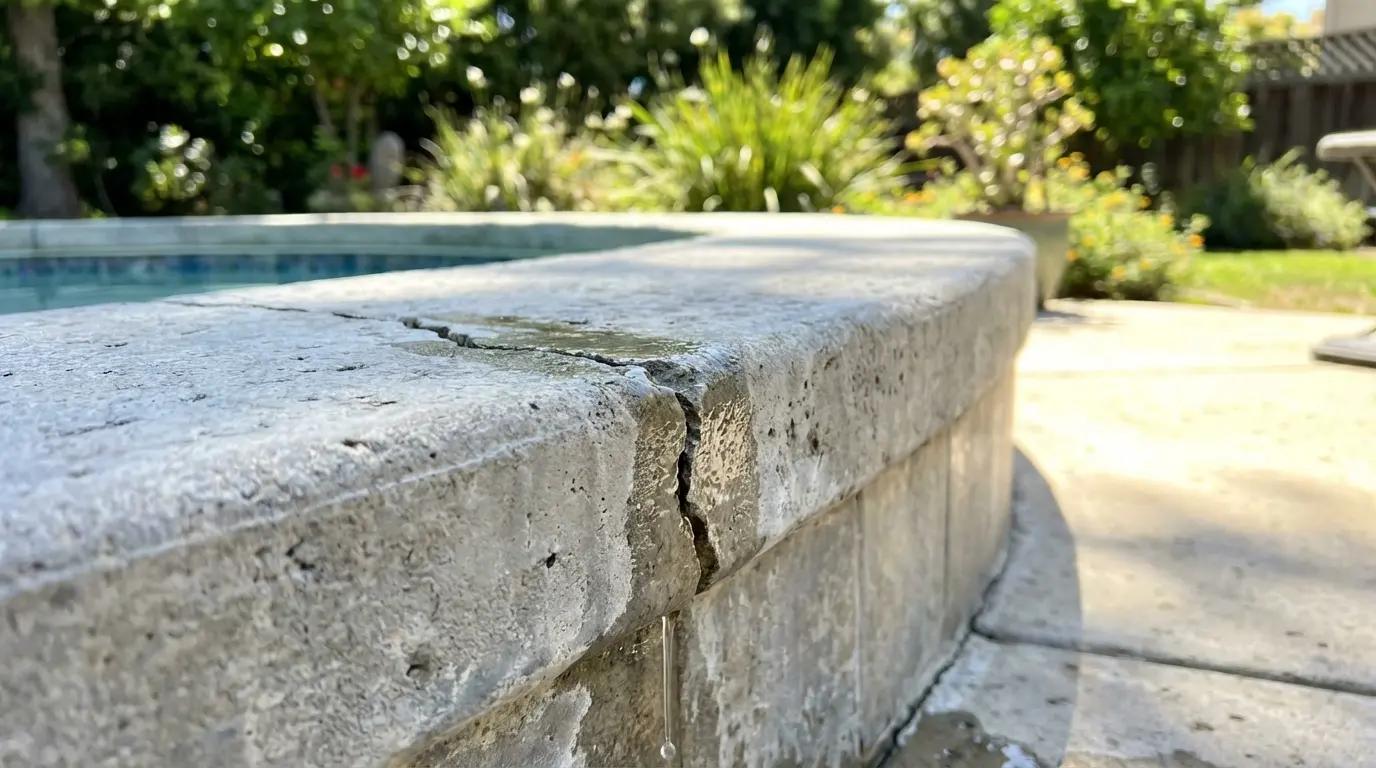
Visible cracks in your pool shell, tiles, or the deck around the pool area are a strong sign that something is wrong. As the ground shifts from water escaping from the pool, it puts stress on the pool structure. That stress causes cracks.
Not all cracks indicate a leak. Some are cosmetic. But if you see cracks forming at the same time your pool is losing water, the two are likely connected. Cracks can also be a pool leak cause on their own. Water seeps through the crack, and the leak can lead to even more shifting and damage to your pool over time.
Look for cracks in the pool floor and walls, along tile lines and coping, in the concrete deck around your pool, and near pool equipment connections. These are common areas where leaks are located.
Sign #4: Wet or Soggy Spots in Your Yard
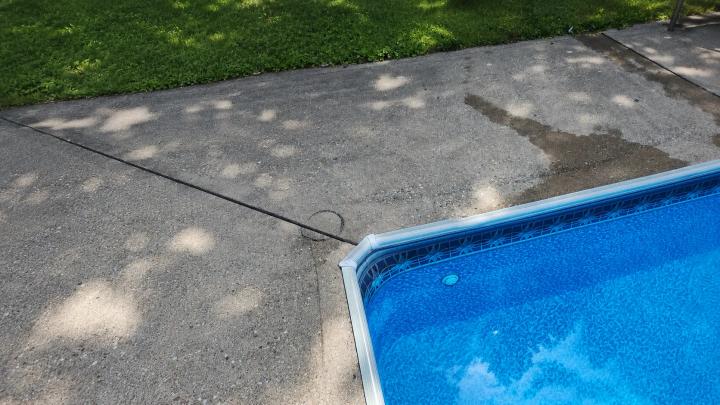
If you notice standing water, soggy grass, or unusually green patches near your pool, that is a red flag. Water from your pool may be leaking through underground plumbing lines and saturating the soil.
This is especially common when there are leaks in plumbing that runs beneath the yard or deck. The water has to go somewhere. It rises to the surface and creates wet spots that do not dry out, even when it has not rained.
Pay attention to areas near the pool equipment pad, along the path where plumbing runs, and between the pool or spa if you have both. Soggy spots in these areas may indicate a plumbing leak that needs attention right away. Persistent wet ground may indicate a leak that has been going on for some time.
Sign #5: You Keep Adding Chemicals but the Water Still Looks Off
When your pool is leaking, it is not just water that escapes. Chemicals leave too. That means the chemical balance in your pool gets thrown off faster than normal. You might notice the water turning cloudy or green. You might find yourself adding chlorine far more often than usual.
If the chemicals in your pool seem to disappear no matter what you do, a leak may be the reason. Fresh water constantly flowing in dilutes everything. The water in your pool never stays balanced because it keeps getting replaced. This makes it nearly impossible to keep your pool clean and safe without dealing with the leak first. If your pool doesn't hold its chemical balance, that is a red flag.
Changes in your pool water clarity or chemistry are often overlooked as signs like normal wear. But when paired with other symptoms, they point strongly to a potential leak.
Sign #6: Your Pool Equipment Runs Constantly or Loses Prime
Your pool pump and filter system are designed to cycle water at set intervals. If your pool equipment is running nonstop or if the pump keeps losing prime (meaning it struggles to pull water), air may be entering the plumbing system through a leak.
Air bubbles in your return jets are another thing to watch for. When a pool is leaking from the suction side of the plumbing, it pulls air into the system. This makes the pump work harder and can shorten the life of your equipment.
If you notice any of these signs, do not ignore them. A simple leak detection visit can help find a leak before it causes serious damage to your pool and spa equipment.
Sign #7: The Ground Around Your Pool Settles or Shifts
Over time, a leak can wash away the soil that supports your pool, deck, and yard. When the ground around your pool settles or sinks, it is often because water has been slowly eroding the base beneath it.
You might notice uneven sections of your pool deck, gaps forming between the pool edge and the deck, or fences, walls, or landscaping near the pool shifting out of place. This kind of damage is often the result of a leak that has gone undetected for a long time. The longer you wait, the worse it gets.
How to Detect a Pool Leak at Home
Before calling a professional, there are a few things you can do on your own:
- Run the bucket test. As described above, this is the easiest way to determine if the water loss is due to evaporation or a real leak.
- Inspect around your pool. Walk the deck and yard. Look for cracks, wet spots, or areas where the ground has shifted.
- Check your equipment. Look at the pool pump, filter, and connections for visible drips or moisture.
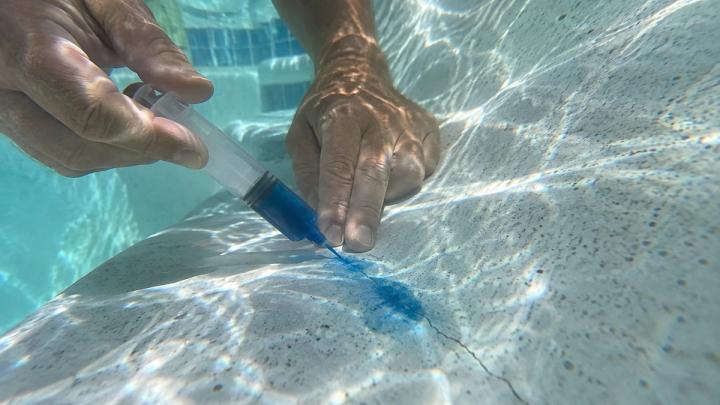
- Try dye testing. If you suspect a crack, hold a dye bottle near the area with the pump off. If the dye gets pulled toward the wall, water is escaping from the pool at that point. Dye testing can help you spot the source of the leak.
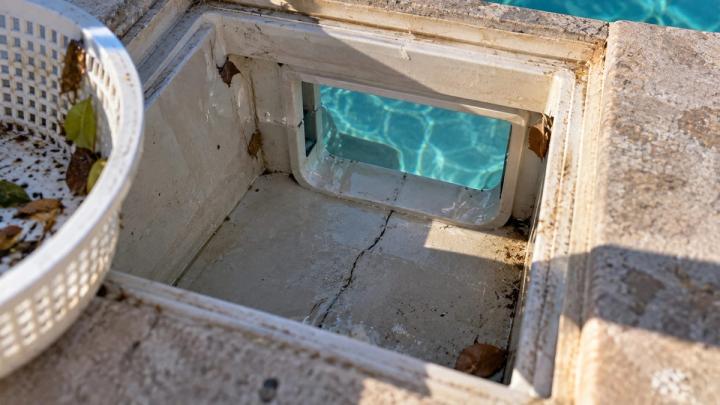
- Monitor your water level. Mark the water level on the skimmer and check it every 24 hours for a week.
These steps can help you spot signs of a pool leak. But to find the exact source, you will likely need expert pool leak detection tools and training.
When to Call a Professional Pool Leak Detection Team
If you have tried the steps above and your pool may be leaking, it is time to bring in the pros. A professional leak detection team has the tools and experience to detect leaks with precision. They can find problems that are invisible to the naked eye, like leaks buried deep in underground plumbing or hidden behind the pool shell.
At Level Up Leak Detection, our technicians use LeakTronics™ acoustic technology to locate leaks fast. We can detect leaks in your pool shell, plumbing, skimmers, returns, and equipment. Our process is non-invasive. There is no draining, no digging, and no guesswork.
We find your leak. Guaranteed.
Level Up Leak Detection: Expert Pool Leak Detection and Repair Services Nationwide
Dealing with a leak is stressful. But you do not have to figure it out alone. Level Up Leak Detection offers pool leak detection services, pool repair, and pool inspection across five U.S. territories. Our team uses LeakTronics™ technology to find leaks with precision. We also offer leak repair services using Torque Lock and Pipepoxy (Pipe Poxy) for lasting results.
No matter where you are, there is a Level Up team near you ready to help you enjoy your pool again.
Pool Leak Causes: What Makes Pools Leak in the First Place?
Understanding pool leak causes can help you prevent future problems. Leaks can often start from normal wear and tear on the pool shell, the plumbing, or the equipment. But leaks can quickly get worse if left alone.
Common pool leak causes include:
- Age. As a pool settles over the years, the structure shifts. Joints loosen. Seals wear out.
- Ground movement. Soil shifts from rain, drought, or freeze-thaw cycles can stress the pool structure and plumbing.
- Poor installation. Bad plumbing connections or low-quality materials can fail sooner than expected.
- Tree roots. Roots growing near underground plumbing can crack or displace pipes over time.
- Chemical damage. Harsh chemicals or improper pool maintenance can weaken the pool shell and fittings.
No matter the cause, the solution starts with professional leak detection. A pool professional with the right tools can find leaks that are invisible to the naked eye. Once the leaks are located and the source of the leak is confirmed, your technician can recommend the right pool leak repair approach.
Do Not Wait: Protect the Integrity of Your Pool
If you notice any of these signs, do not wait. A pool leak does not fix itself. Each day it goes undetected, you lose water, waste money, and risk damage. Leaks early detected means smaller repairs, lower costs, and a pool that stays in great shape for years to come.
Level Up Leak Detection is here to help. We offer professional pool leak detection, pool repair, and repair services backed by over 30 years of experience. Our team uses the best tools in the business to detect leaks with precision and get your pool back to normal fast.
Call Level Up Leak Detection at (866) 420-5383 or visit levelupleakdetection.com/locations to find your nearest territory and schedule service today.