When you step out onto your patio and spot a web of thin lines spreading across your pool floor, it is easy to assume the worst. A crack in your pool plaster might look alarming, but the root cause could be anything from normal curing tension to shifting soil deep underneath your pool shell. Every crack tells a specific story about moisture, chemistry, or ground load.
Knowing what causes pool plaster to crack allows you to distinguish between an aesthetic blemish and an active leak. Surface lines often form during the early curing phase when water evaporates too rapidly. In other instances, ground movement shifts the underlying concrete, turning small surface fractures into serious structural problems. Determining the actual depth of the fracture dictates whether a cosmetic plaster repair will work or if your vessel requires comprehensive pool structural repairs.
Diagnosing Plaster Cracks: Surface Shrinkage or Gunite Shell Movement
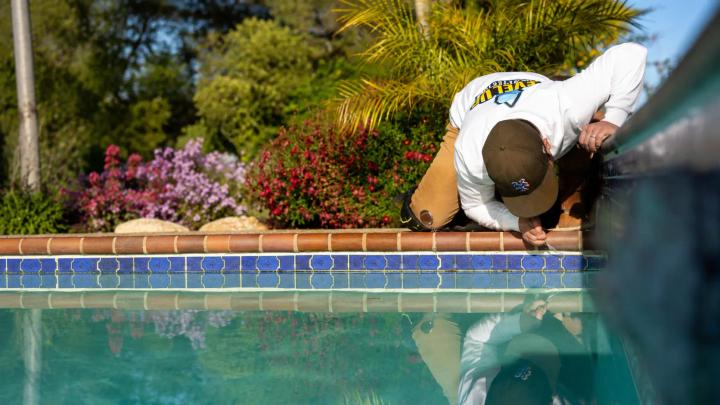
Before picking up an underwater epoxy kit or calling for an emergency drain, you must establish where the crack begins and ends. The plaster layer on inground concrete pools is typically between three-eighths and one-half inch thick. It serves as a waterproof barrier and a smooth walking surface over the rough gunite or shotcrete body. Plaster cracks that stay confined to this top coating rarely jeopardize the structural integrity of your pool.
When fractures originate within the gunite itself, the crack migrates outward through the plaster layer. You can often spot these deeper structural cracks because they follow predictable patterns. They tend to track across the main floor, extend up through the bond beam, or crack the waterline tile line. These fractures frequently produce continuous water loss that destabilizes the soil around the shell.
The Coin-Tap Test for Delamination
A dependable way to inspect questionable plaster cracks involves listening to the bond between the plaster and the concrete beneath it. Plaster needs a clean, rough mechanical surface to bond securely to gunite. If that bond weakens, the plaster lifts away from the shell, creating a hollow void.
You can perform this check by taking a heavy coin or a small blunt tool and tapping gently along the surface near the crack. Solid plaster backed by dense concrete gives off a sharp, crisp click. If you tap across a section and hear a low, dull thud or hollow ring, the plaster has separated from the gunite shell. Delamination often leads to large chunks popping off the wall over time, which requires specialized pool crack repair rather than a light surface coat.
Dye Testing Cracks Under Water
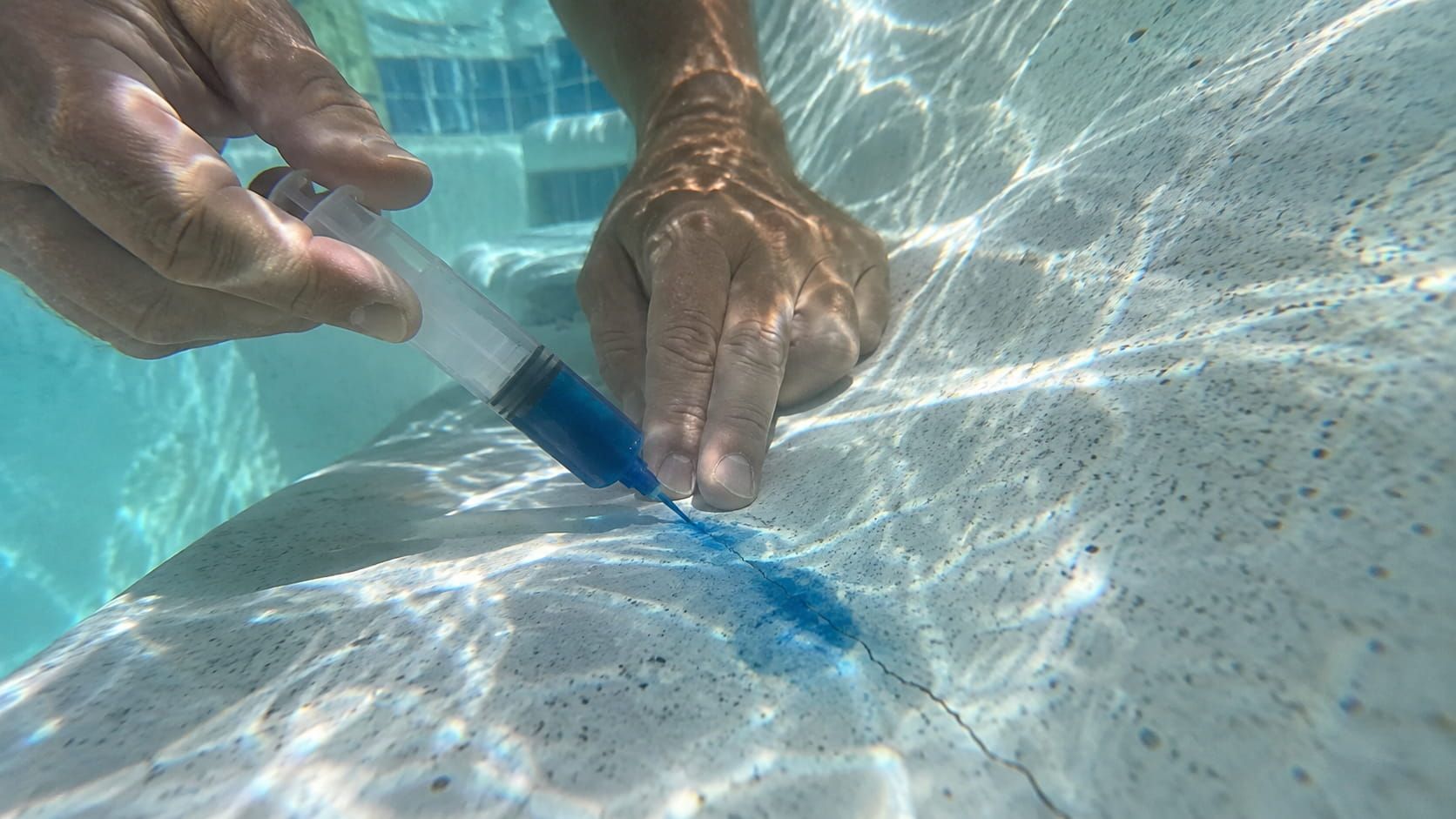
Determining whether a crack causes active water loss requires a simple dye test in calm water. Turn off the pool pump so the water settles completely. Use a syringe to place a small cloud of dark dye within half an inch of the fissure line.
If the dye drifts away and slowly disperses into the basin, the crack is likely surface crazing that remains sealed against the concrete shell. If the dye stream pulls sharply into the fissure and vanishes into the wall, water is escaping out of the vessel. Leaks through the shell will wash away supporting soil beneath your deck. If you see water loss along your cracks, book a professional pool leak detection before the surrounding subgrade erodes.
Surface Crazing and Rapid Curing Shrinkage
Many of the fine cracks found in swimming pool plaster appear shortly after installation. Plaster is a mixture of white Portland cement, marble dust or quartz aggregate, and clean water. As this cement paste cures, it hydrates and shrinks. If the weather is dry, windy, or hot while the plaster cures, moisture evaporates from the surface faster than the material can handle.
This rapid loss of moisture creates surface crazing, which appears as a dense network of shallow hairline cracks. You will frequently see crazing on the top entry steps and shallow ledges because those sections sit exposed to the sun longer before the pool fills with water. Craze cracks usually measure less than a millimeter deep. They create a rough appearance and can collect microscopic algae or mineral scale, but they do not penetrate the structural pool shell.
Aggressive Water Chemistry and Plaster Etching
Water always seeks mineral balance. When swimming pool water lacks sufficient dissolved minerals, it aggressively extracts calcium directly from the pool plaster. This process, known as etching, softens the cement binder that holds the smooth plaster finish together.
Two water chemistry parameters play an important role here:
- Low pH: Acidic water breaks down the calcium carbonate in the plaster matrix, leaving microscopic pits that expand into rough fissures.
- Low Calcium Hardness: Soft water will dissolve plaster to satisfy its chemical balance, which weakens the finish and turns fine hairline cracks into noticeable gaps.
Once aggressive water erodes the top layer of plaster, regular water movement and normal temperature swings will widen those small gaps. Routine water testing and maintaining balanced alkalinity and calcium levels protect the plaster from early degradation.
Expansive Soil Movement Under Austin Concrete Pools
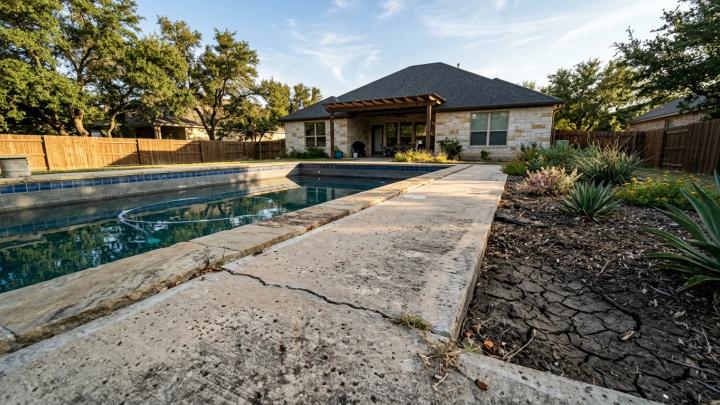
In regions with heavy clay subsoils, external ground movement is the leading cause of deep structural cracks. In areas like North Austin and South Austin, the ground swells dramatically when saturated with heavy rain and shrinks tightly during prolonged dry spells. This constant shifting exerts thousands of pounds of pressure against the exterior walls and bottom floor of concrete pools.
When the ground beneath a concrete pool moves unevenly, the shell experiences severe bending stress. The pool shell can snap under these loads, resulting in stress fractures that run continuously across the pool floor or vertically through the coping and bond beam. Plaster cannot flex with shifting concrete. Any movement in the gunite shell immediately reflects through the plaster coat. Homeowners experiencing sudden pool settlement can review our insights on common signs of a pool leak to evaluate shell integrity.
When to Patch Plaster and When to Call for Structural Repair
Knowing when to manage a crack yourself versus calling in a pool repair technician comes down to stability, depth, and water loss. Shallow craze marks and small hairline cracks that pass the dye test do not require immediate structural intervention. Sanding high spots or applying a localized plaster patch can improve the finish until you decide to replaster the entire basin.
On the other hand, wide stress fractures or cracks that drink dye point toward structural problems that a simple surface patch cannot fix. Smearing silicone or basic underwater epoxy across a moving structural crack fails because ground pressures will pull the patch apart within weeks. When the gunite shell cracks, the vessel requires torque-lock carbon fiber or steel staples to bridge the gap and stabilize the concrete before new plaster is applied.
If you see widening fissures, notice damp soil around your yard, or suspect your pool loses water daily, schedule professional swimming pool inspections. Level Up Leak Detection provides diagnostic inspections, accurate dye testing, and lasting pool crack repair across North Austin, South Austin, and surrounding areas. Contact our team today to evaluate your pool plaster and protect the shell beneath it.