Pool Leak Detection in South Austin
Suspect your South Austin pool is losing water? Level Up Leak Detection uses LeakTronics™ technology to find the exact source - no draining, no digging. Serving South Congress, Circle C, Buda, Kyle, Dripping Springs, San Marcos and the Hill Country. Fast scheduling and 24-hour reports.
A leaking pool in South Austin behaves differently than a leaking pool almost anywhere else in Texas, and the reason is what is underneath it. West of Interstate 35, your pool likely sits over fractured Edwards limestone, where escaping water vanishes into bedrock joints and solution channels instead of pooling into an obvious wet spot. East of I-35, expansive clay grabs the water and swells, then shrinks during the next drought, stressing the structure further. Either way, a leak in South Austin hides better and does more damage than homeowners expect. The sooner you find it, the less your pool, your wallet, and the Hill Country environment absorb.
Why South Austin Pools Leak Differently
This territory sits at the meeting point of two completely different ground conditions, split roughly by Interstate 35. Understanding which side your pool is on explains why local diagnostic expertise matters so much here.
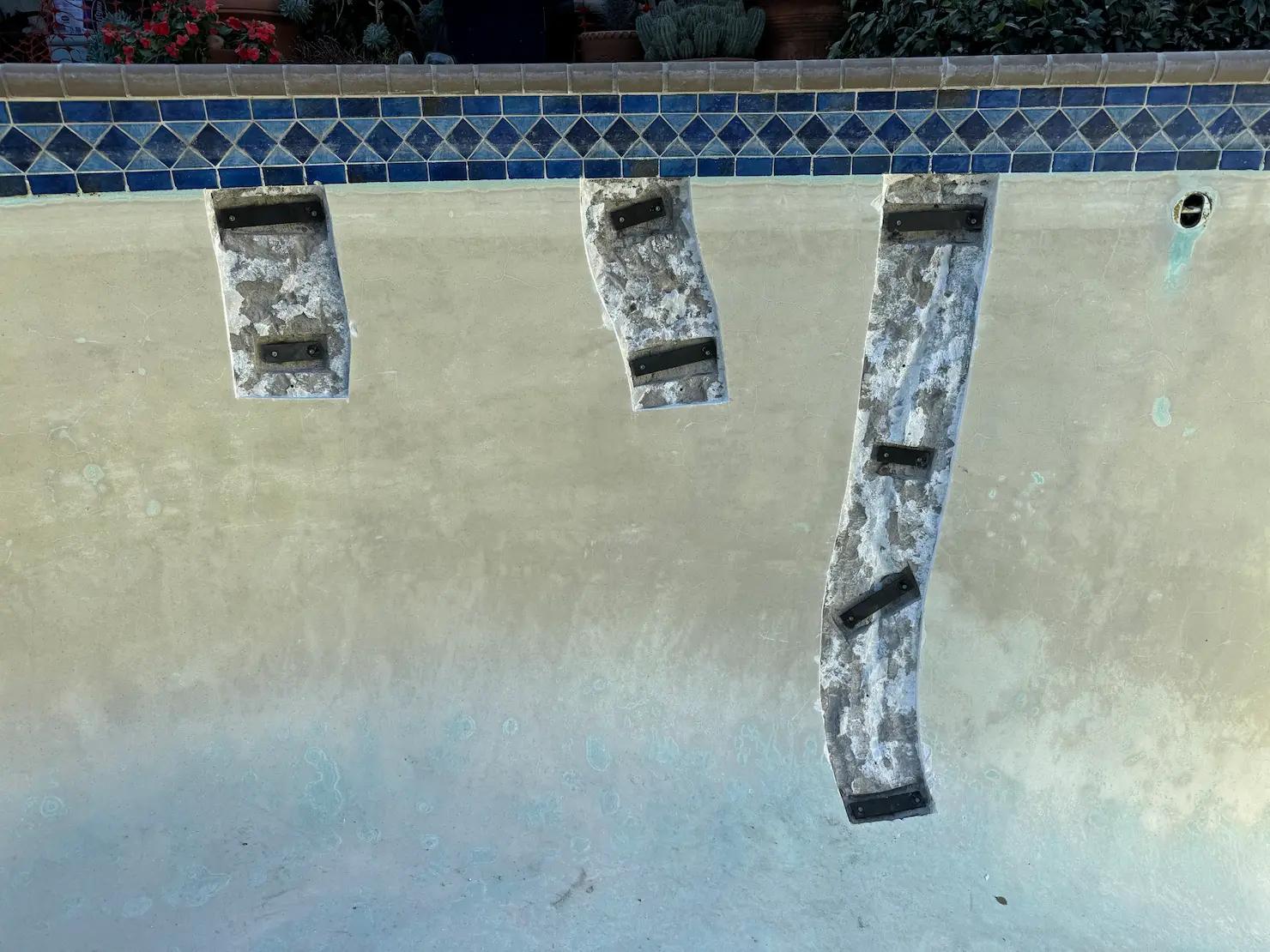
Edwards Limestone and Karst Terrain (West of I-35) - Through Dripping Springs, Oak Hill, Circle C, western South Austin, and into the Hill Country, pools sit on or just above limestone bedrock. This is karst geology, riddled with fractures, bedding planes, solution channels, and occasional voids. When a pool leaks here, water does not collect and reveal itself. It follows the path of least resistance into the rock, sometimes surfacing dozens of feet away, sometimes never surfacing at all. Reading the surface symptoms alone will mislead you. Only pressure testing and electronic detection find the true source.
Edwards Aquifer Recharge Zone Sensitivity - Much of western South Austin overlies the Edwards Aquifer recharge zone, one of the most environmentally protected areas in Texas. A pool leaking chlorinated, chemically balanced water into this zone is not just losing water. It is introducing treated water directly into a system that feeds regional drinking water and iconic spring-fed sites like Barton Springs. In this part of the territory, prompt leak detection is part of being a responsible steward of a shared resource.
Expansive Clay Movement (East of I-35 and the Corridor) - Through Buda, Kyle, and the I-35 corridor toward San Marcos, expansive clays dominate. These soils swell when wet and shrink hard during drought, and Central Texas swings between both extremes regularly. The constant shrink-swell movement stresses pool shells, bond beams, and plumbing connections. A pool that was watertight in a wet spring can crack or develop fitting failures after a single brutal summer.
Flash Flood Alley Storms - South Austin sits in the heart of Flash Flood Alley, one of the most flood-prone regions in North America. Sudden, intense storms saturate the ground in hours, spike water tables, and shift soil around pool structures rapidly. Conditions that were stable in the morning can change by nightfall.
Our LeakTronics™ Detection Process
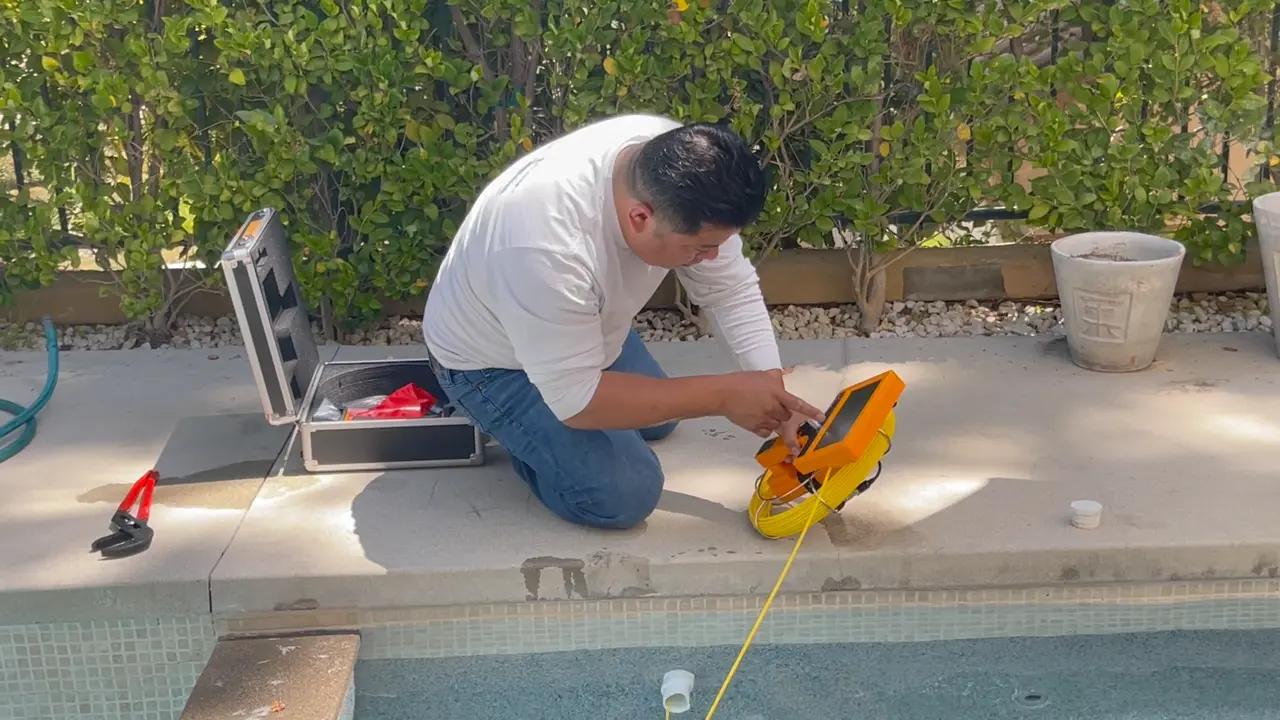
Level Up Leak Detection uses the most advanced leak detection technology in the industry. Our South Austin process covers every potential failure point:
Plumbing Pressure Testing - the suspect line is isolated and tested individually. If the plumbing is the likely source, we isolate and test only the suspect circuit, whether that is a supply line, return line, main drain, skimmer line, spa line, or water feature plumbing. This is critical in karst terrain, where a leaking line dumps water into bedrock that gives no surface clue about which line is failing.
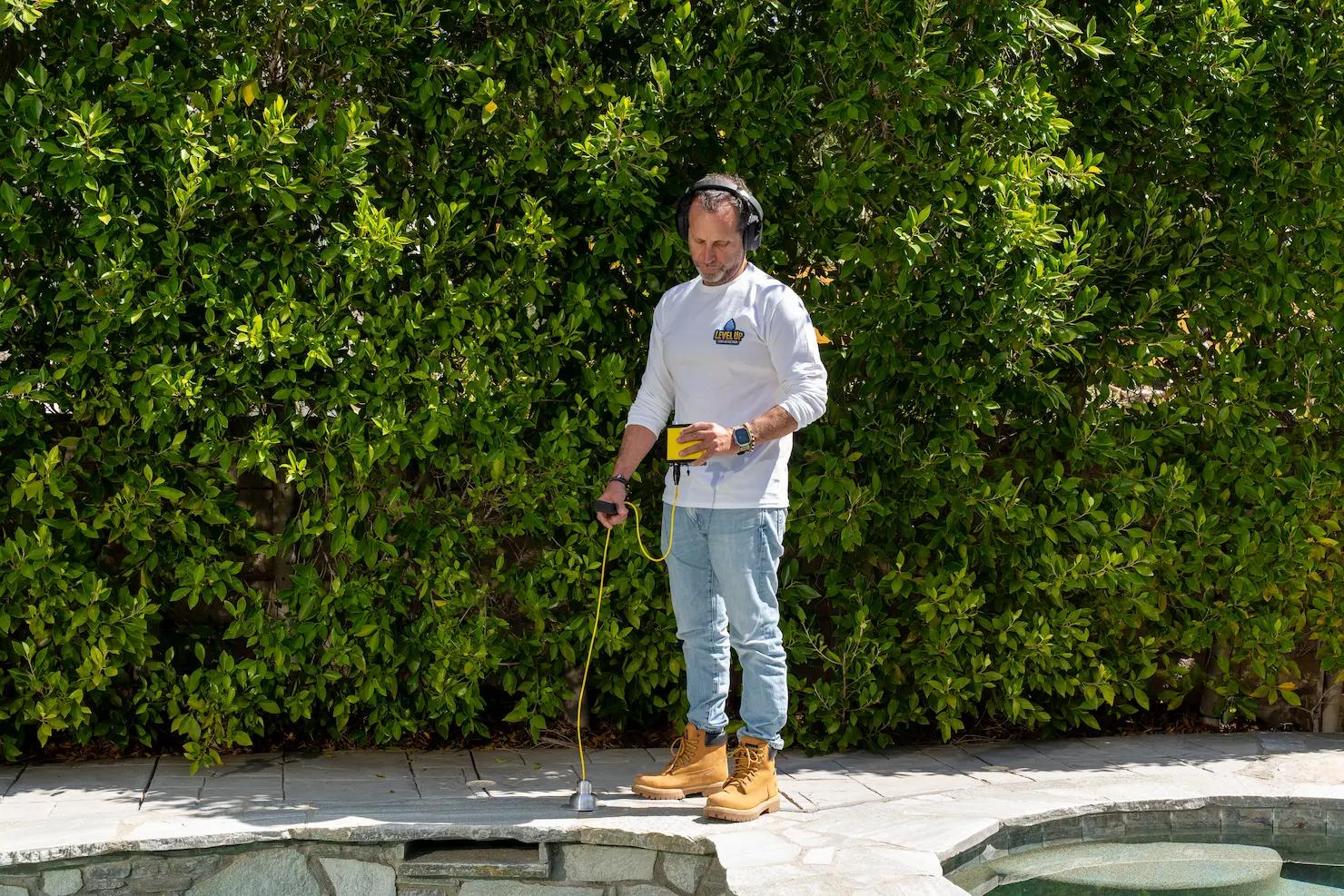
Electronic Shell Scanning - Our LeakTronics™ hydrophones detect the acoustic signature of water escaping through the pool shell. Cracks from clay movement, separations at the bond beam, and structural failures all produce identifiable sounds we locate with precision, even when the surrounding limestone hides the water's path.
Fitting and Penetration Testing - Every skimmer, return jet, main drain, light niche, and water feature connection gets checked individually. Long South Austin swimming seasons mean these components run eight months a year, and the junctions between materials are common failure points.
Equipment Pad Evaluation - Pumps, filters, heater connections, valves, and unions are inspected for leaks and wear. Equipment that runs March through October ages faster than equipment in shorter-season climates.
Your pool stays full throughout. No draining, no digging. Two to three hours for definitive answers.
When South Austin Pool Owners Should Call
Unexplained water loss in summer - Central Texas heat drives evaporation high enough to mask real leaks. If you are adding water more than about a quarter inch to half inch per day beyond normal evaporation, or topping off more than usual, it is worth checking.
After a major storm - Flash Flood Alley storms shift soil and spike water tables fast. New symptoms after heavy rain often mean the ground movement opened a failure point.
Wet spots, soft ground, or unexplained lush patches - In clay-soil areas east of I-35, leaks often surface as soggy spots or oddly green grass. West of I-35, these signs are less reliable because water disappears into rock, making professional detection even more important.
Before buying or selling - Pool condition is a significant factor in South Austin and Hill Country real estate, where pools are common and valued.
Edwards Aquifer zone responsibility - If your property sits over the recharge zone, prompt detection protects both your investment and the regional water system.
Your 24-Hour Report
Every South Austin service call includes a comprehensive digital report within 24 hours, with findings documented, the leak location identified, repair costs estimated, and priorities ranked. Level Up Leak Detection of South Austin backs every pool leak detection with our leak-finding guarantee. Schedule today.
Frequently Asked Questions
Answers to the questions South Austin homeowners ask most about pool leak detection.
Talk with a certified leak detection technician. No pressure, just straight answers.
How does LeakTronics™ find leaks without draining?
Electronic hydrophone sensors and pressure testing locate leaks by sound and pressure loss while your pool stays full. Our technology detects water escaping through cracks, plumbing failures, and compromised fittings, pinpointing the exact location without draining or excavation. This matters even more in South Austin, where limestone hides where the water actually goes.
Why are pool leaks harder to find in South Austin?
West of Interstate 35, pools sit over fractured Edwards limestone. Leaking water disappears into bedrock joints and solution channels rather than pooling into an obvious wet spot, so surface symptoms are misleading. Pressure testing and electronic detection are the only reliable way to find the true source in karst terrain.
What does the Edwards Aquifer recharge zone have to do with pool leaks?
Much of western South Austin sits over the recharge zone that feeds regional drinking water and spring-fed sites like Barton Springs. A leaking pool introduces chlorinated, treated water directly into this sensitive system. Prompt detection protects both your investment and a shared regional resource.
My pool only seems to lose water in summer. Is it a leak?
Maybe. Central Texas summer heat drives high evaporation that can mask or mimic a leak. We can determine whether your water loss exceeds normal evaporation and, if so, pinpoint the source. Many summer "evaporation" problems turn out to be genuine leaks.
Can you find leaks in pools built on clay soil near I-35?
Yes. East of I-35, expansive clay swells and shrinks with Central Texas wet-dry cycles, stressing shells and plumbing. We pressure test a suspect line and scan the shell to locate clay-movement cracks and fitting failures, without excavation.
How soon can I schedule?
We typically schedule within 24 to 48 hours across South Austin, Buda, Kyle, Dripping Springs, San Marcos, and the surrounding Hill Country.
Pool Leak Detection in South Austin
- Pool Leak Detection in Barton Hills
- Pool Leak Detection in Bee Cave
- Pool Leak Detection in Bouldin Creek
- Pool Leak Detection in Buda
- Pool Leak Detection in Canyon Lake
- Pool Leak Detection in Circle C Ranch
- Pool Leak Detection in Dawson
- Pool Leak Detection in Del Valle
- Pool Leak Detection in Downtown Austin
- Pool Leak Detection in Driftwood
- Pool Leak Detection in Dripping Springs
- Pool Leak Detection in Eanes
- Pool Leak Detection in East Austin
- Pool Leak Detection in East Riverside
- Pool Leak Detection in Far South Austin
- Pool Leak Detection in Galindo
- Pool Leak Detection in Hornsby Bend
- Pool Leak Detection in Kyle
- Pool Leak Detection in Lockhart
- Pool Leak Detection in Manchaca
- Pool Leak Detection in Maple Run
- Pool Leak Detection in Montopolis
- Pool Leak Detection in New Braunfels
- Pool Leak Detection in Oak Hill
- Pool Leak Detection in Onion Creek
- Pool Leak Detection in Polo Club
- Pool Leak Detection in San Marcos
- Pool Leak Detection in South Congress
- Pool Leak Detection in South Lamar
- Pool Leak Detection in Southeast Austin
- Pool Leak Detection in Spicewood
- Pool Leak Detection in Spring Branch
- Pool Leak Detection in Tarrytown
- Pool Leak Detection in Travis Heights
- Pool Leak Detection in Westlake
- Pool Leak Detection in Wimberley
- Pool Leak Detection in Zilker
How It Works
Schedule
Contact us via phone or online form. We'll set up a convenient time for your inspection.
Detect
Our certified technicians use specialized equipment to locate the leak source and deliver a detailed leak detection report.
Repair
After your leak detection report is delivered, we will provide an estimate for any recommended repairs.
What South Austin Customers Say
Need Pool Leak Detection in South Austin?
Schedule your inspection today and get answers fast.
Thanks — we've got it!
A local leak specialist will reach out shortly.
Need help right away?Call us now
Other Services in South Austin
We offer a full range of pool leak detection and repair services.