
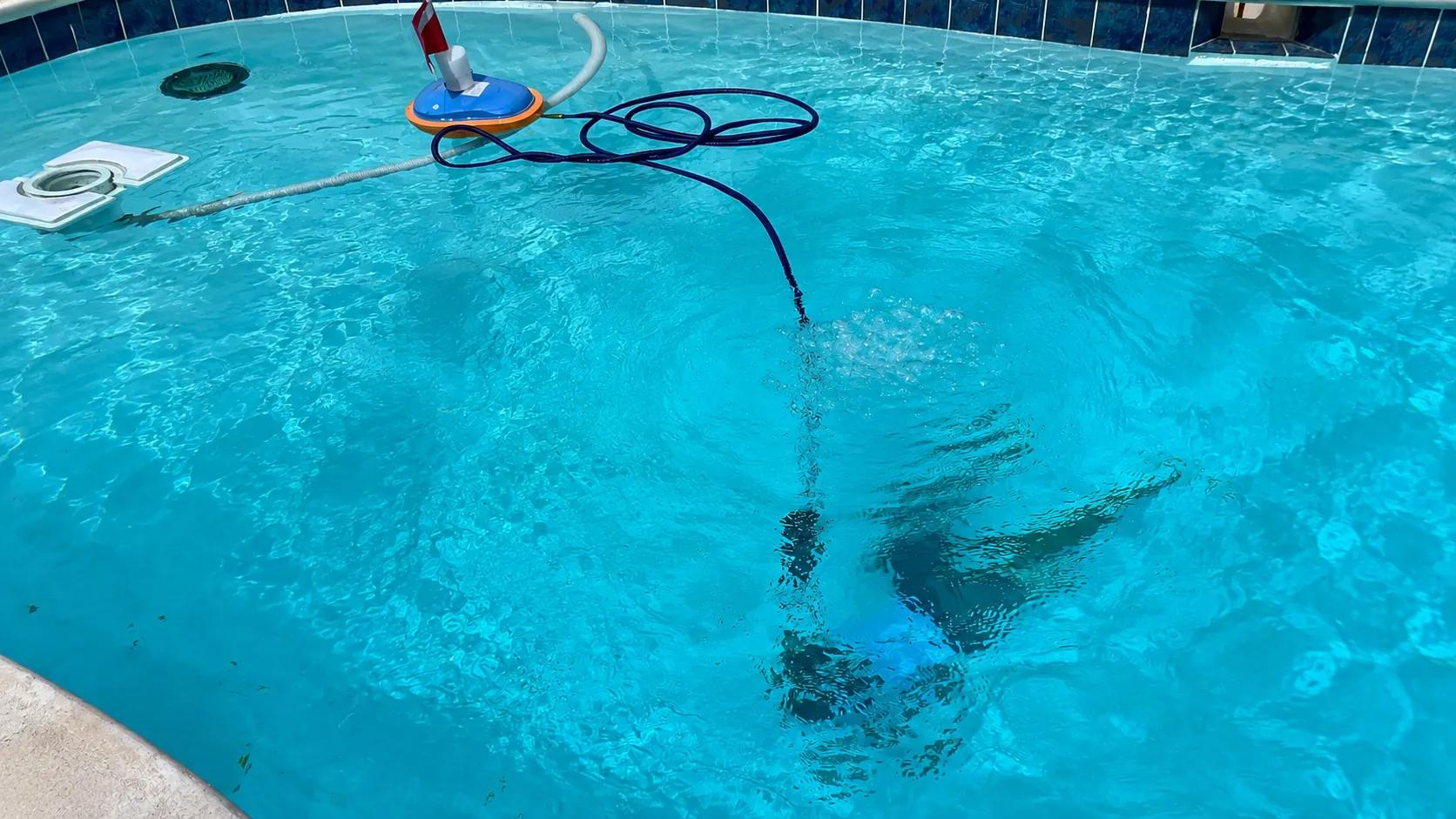
It's May in Highlands Ranch. The cover comes off, the pool gets filled, and the pump kicks on. Two weeks later, the water level is down a few inches.
Nobody touched the pool all winter. That's the problem. Colorado pool leaks often start in November and don't show up until spring.
We're the pool leak detectors for the Denver metro and Front Range. Here's what causes leaks in Colorado pools, how our leak detection works, what it costs, and when to call.
Why Colorado Pool Leaks Show Up in Spring
Most guides treat pool leaks as a summer problem. In Colorado, spring is when many leaks first show. The damage happened months before.
Here's what we see on most spring calls:
- Freeze-thaw cycling drives the damage. Our winters swing above and below freezing over and over. Each cycle pushes on tile, coping, and plaster. Small cracks open a little more each time.
- Water left in the lines freezes. If a line wasn't fully blown out at closing, ice can split it. The crack sits underground all winter, quiet.
- The skimmer takes a beating. Ice in the skimmer throat can crack the body. This is one of the most common spring leaks we find.
- Clay soil moves the pool. Much of the Front Range sits on bentonite clay. It swells when wet and shrinks when dry. That movement stresses underground plumbing, especially near the equipment pad.
"In Colorado, the leak you find in May usually started in December. Freeze damage is quiet. It just sits there until you fill the pool and turn the pump on. That's why we tell people to get a detection visit right after opening, not mid-July."
The good news? Most freeze cracks are cheap fixes once found. A cracked fitting or a split line is far easier to repair in May than after a full season of water loss.
Leak or Evaporation? How to Tell in Colorado
Colorado air is dry, and the sun is strong at altitude. Your pool loses real water to evaporation, especially in July. On a hot, windy day, it can run close to a quarter inch a day in summer.
So how do you know if the loss is more than evaporation? Use two simple checks.
- Do a 24-hour bucket test. Set a bucket of pool water on a pool step. Mark the water level inside the bucket and on the pool. A 24-hour bucket test tells you whether the loss is evaporation and whether it happens with the pump on or off. If the pool drops more than the bucket, you have a leak. Here is our full bucket test guide.
- Watch the pump. Does the pool lose water only with the pump running? That points to the pressure side of the plumbing, like a return line or a fitting at the equipment pad. Losing water only with the pump off points to the suction side or the shell.
These are the two facts that shape the detection visit. They tell us where to look first. Bring them to the call.
Signs you're dealing with a hidden leak:
- You add water more than once a week.
- There are soggy spots around the pool or near the equipment pad.
- Cracks show up in the tile line, skimmer, or deck.
- Your water bill jumps after you open the pool.
- The pump pulls air or loses prime.
A small leak wastes thousands of gallons of water over a season, plus the chemicals you keep adding. Losing water? Call our Colorado team at (720) 783-5380.
How Our Pool Leak Detectors Find Pool Leaks
Every full leak detection visit follows the same order. Non-invasive methods come first. No draining. No digging until we know exactly where.
- Shell inspection with dye. We start by dye testing the shell, checking the whole pool shell for loss. That means cracks, the skimmer, return fittings, the light niche, and main drains. Dye pulls toward any opening that is losing water.
- Listening for underground breaks. Next, we use hydrophones or ground microphones to pinpoint an underground break before anyone cuts the deck. Water escaping a cracked or separated PVC line makes a sound. Our LeakTronics equipment picks it up through concrete and soil.
- Equipment check. We look at the pump, filter, heater, and valves. Freeze damage often shows here first.
- Pressure testing, only if needed. Pressure testing is our last resort, not our first move. If listening can't pin down a line, we isolate the suspect suction or return line and test it on its own to locate the failing run. We also use pressure testing to confirm a line holds after the repair.
- Written finding and repair quote. You get a clear detection report showing the leak and what it takes to fix it.
This order matters. Dye testing the shell and listening for underground breaks finds most pool leaks without guesswork. Pressure testing every line on every visit adds time and cost you usually don't need. Pressure testing a suspect line only makes sense when the quieter methods can't settle it. Want more detail? Read about acoustic leak detection equipment and dye testing.
Common Colorado Leak
What Causes It
How We Find It
Cracked skimmer.
Ice in the skimmer over winter.
Dye at the throat and body.
Split return line.
Water left in the line froze.
Ground microphones over the line.
Tile line and coping cracks.
Freeze-thaw cycles.
Dye along the waterline.
Leak near the equipment pad.
Clay soil shifting pipes.
Visual check, then listening.
Light niche leak.
Cracked conduit or worn seal.
Dye at the niche and cord.
Pool Leak Detection Costs in Colorado
Level Up charges a flat rate for leak detection. You know the price before we start. No hourly charge while we look.
Colorado labor rates and the size of your pool affect any repair. Leak detection costs stay flat. A pool with an attached spa or many lines may take longer to check, but the price doesn't change mid-visit. For a full breakdown, see our guide to pool leak detection cost.
What about insurance? Some policies cover sudden damage from a water leak. Detection may be covered along with the repair in some cases. Call your insurer and ask. Our written report helps with any claim.
Can Pool Leaks Be Repaired on the Same Service?
Yes. We handle finding and fixing pool leaks. Once we know the leak location, we give you a repair quote right away.
Common repairs include:
- Skimmer cracks sealed or rebuilt. See our guide to crack in pool skimmer repair.
- Underground plumbing repair on cracked PVC lines, often without tearing up the whole deck.
- Structural cracks in the shell, fixed with staples that hold through freeze-thaw. Read about structural pool leak repair.
- Fitting and light niche leaks sealed underwater, without draining.
After any repair, we re-check the pool. Once in a while, a second leak shows only after the first one is fixed. We'd rather catch it before we leave.
Most of these are underground plumbing repair or fitting work. Read how pool leaks get fixed without draining, or see our pool repair service.
Do we check spas and hot tubs? Yes, an attached spa gets the same full leak detection. Our focus is residential pools and spas. For a commercial pool, call us first to talk it through.
Questions to Ask Before You Hire a Leak Detection Company
There are plenty of leak detection companies near Denver, and plenty of pool leak detection companies serving the Front Range. Before you book, ask these pool leak detection questions:
- Do you charge a flat rate, or by the hour? Charging for detection by the hour can add up fast.
- What do you try first? Acoustic listening and dye should come before pressure testing.
- Do you guarantee you'll find the leak? We do. Ask anyone you call the same thing.
- Do you repair what you find? One company for detection and repair saves a second visit.
- What do customer ratings say? Check the customer rating and review count on Google, not just one review.
You can read our Colorado reviews on Google and see what pool owners losing water say about us.
Pool Leak Detection Across the Denver Metro
Our Colorado team is based in Littleton and serves the whole Denver metro. That includes pool leak detection in Denver, Aurora, Lakewood, Arvada, Littleton, Centennial, Highlands Ranch, Parker, and Castle Rock. Up north, we cover Boulder, Longmont, Broomfield, Westminster, Thornton, Erie, and Louisville. West, we reach Golden, Evergreen, and Conifer.
Every Colorado pool deals with the same winter, but each area has its own quirks. Foothill pools in Evergreen see harder freezes. Newer builds in Parker and Castle Rock often sit on fresh fill and clay that is still settling. Check our local posts on fiberglass pool cracks in Arvada and DIY pool leak repair in Bennett.
Buying a home with a pool? We also do a full pool inspection in Colorado before you close.
Book Colorado Pool Leak Detection Today
Don't wait until July to find out what winter did to your pool. Our leak detection services are LeakTronics certified, licensed, and insured. We've dealt with leaks for over 30 years, and we guarantee we'll find yours.
Ready to stop losing water? Call (720) 783-5380 or visit our Colorado location page to book. We'll find your leak, show you where it is, and fix it right.


