There are two kinds of pool cracks: the ones that hurt your pool's looks, and the ones that are quietly draining it. Structural pool leak repair deals with the second kind, and it is the repair work most pool companies get wrong.
Here is the pattern we see across every market we serve. A pool owner notices a crack and water loss. Someone injects epoxy or skims fresh plaster over the repair area. The pool looks great for a season. Then the crack reopens in the exact same line, and the leak continues like nothing happened.
This guide explains how to tell whether your crack is actually structural, why the most common repair products fail on structural cracks, and the repair process that stops them permanently.
How to Tell If a Pool Crack Is Structural
Not every crack in a swimming pool threatens the pool structure. Most inground pool shells wear a network of fine surface crazing in the plaster, and that is cosmetic. A structural crack goes through the shell itself, and it behaves differently:
- It follows one defined line, often running through corners, steps, or diagonally across walls, instead of spiderwebbing randomly.
- It is wide enough to catch a fingernail, and it may show white calcium streaks bleeding out of it.
- It grows. Structural cracks lengthen or widen after drought, heavy rain, or a hard winter, because ground movement is what made them.
- It usually leaks. If you notice your pool water level dropping faster than evaporation explains, and a visible crack is present, the crack is likely involved.
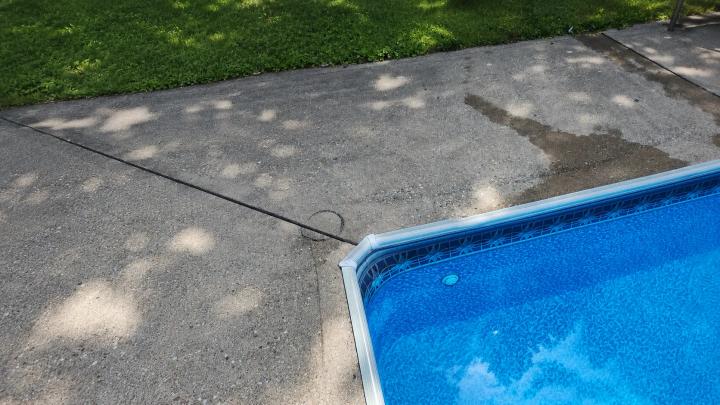
- It often has company. Cracks in the deck or coping that line up with cracks inside the pool point to movement under the whole structure.
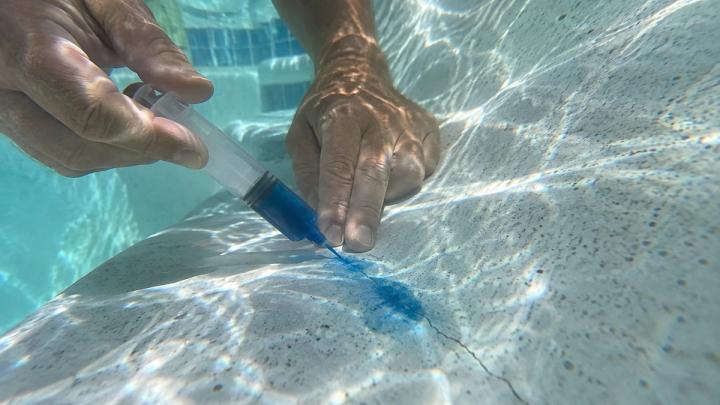
Confirm it before anyone quotes you. A dye test settles whether a crack is pulling water: release a thread of dye an inch away in still water and watch. If the dye streams into the crack, it goes through the shell. If you only suspect a leak and see no crack, start with a bucket test to rule out evaporation, then bring in professional detection. Our guide on how to determine if your pool has a leak covers both.
Think you may have a leak in a crack right now? Call Level Up Leak Detection at (866) 420-5383 or schedule online. We confirm before we quote.
Why Most Structural Crack Repairs Fail
Now the part of pool ownership nobody warns you about. Most repairs sold as "structural" are cosmetic repairs applied to a structural problem.
Epoxy injection is the big one. It gets marketed as a structural crack solution, and it does fill the crack. But filling is not fixing. Epoxy is passive. It hardens in the gap and hopes the concrete stops moving. The forces that cracked your shell (expansive soil, settling, freeze-thaw cycling, hydrostatic pressure) did not retire when the epoxy cured. The ground keeps pushing, the shell keeps flexing, and the bond lets go. The same is true of pool plaster repair over a structural line: new plaster hides the crack and inherits its movement.
That is the honest test for choosing the right repair method: does the repair resist future movement, or just fill the past damage? A temporary fix fills. A structural repair holds.
"Epoxy injection is the repair we get called to redo more than any other. It is not that the installer did bad work. It is that the method asks a filler to do a structural job. Staples squeeze the crack shut and keep squeezing when the ground moves. That is the difference between a repair and a delay."
Level Up Leak Detection team
How Structural Staple Repair Works
Level Up performs swimming pool crack repair with the Torque Lock staple system, the specialized repair used on concrete, gunite, and shotcrete shells across the industry. Here is the repair process:
- Detect first. Professional leak detection confirms the crack is the true leak source. Leak detection tools like hydrophones and a dye test do the confirming, so nobody staples a crack while the real leak sits in the plumbing.
- Expose the crack. The repair area is drained and the crack is routed into a clean channel.
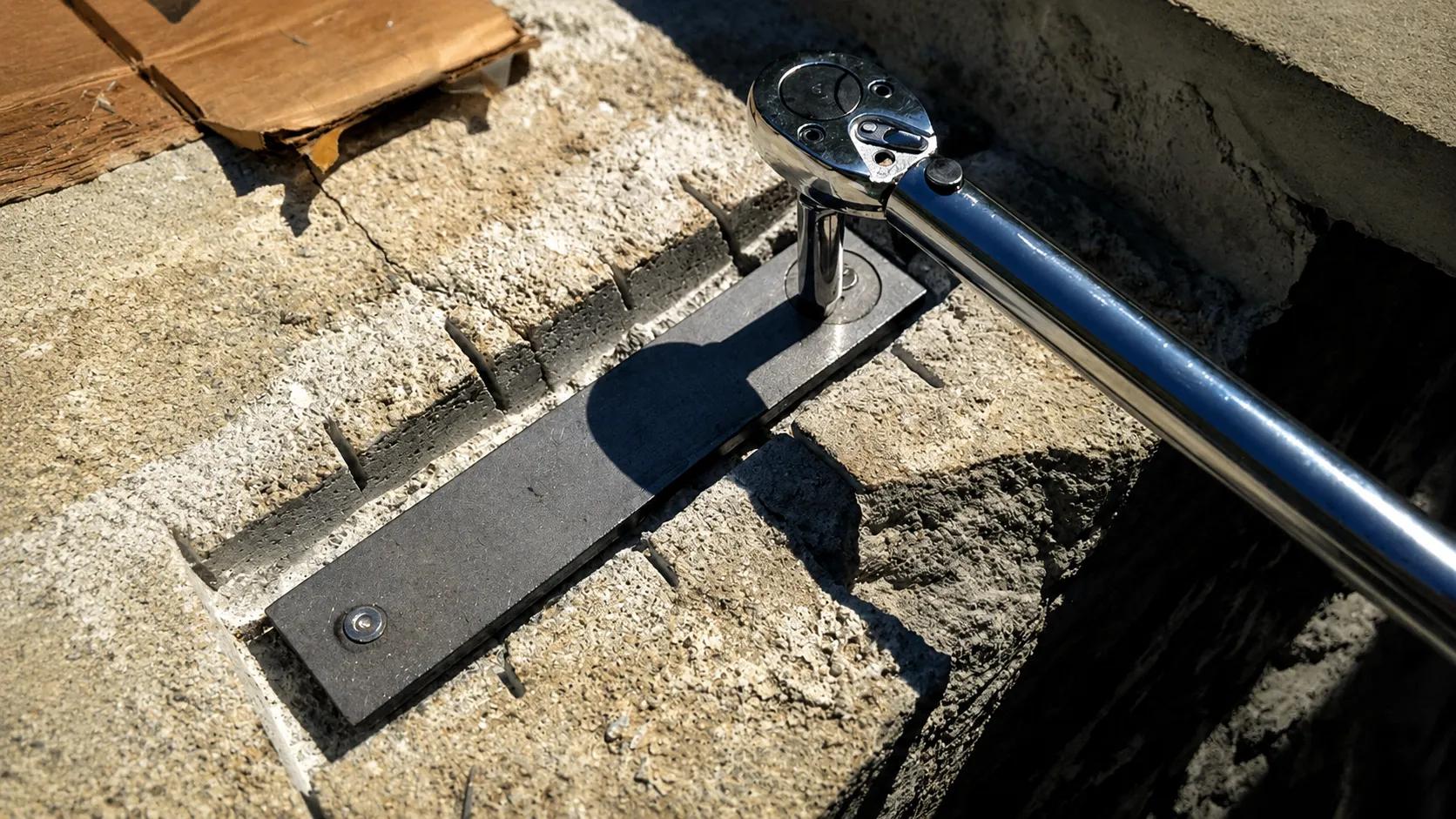
- Set the staples. Staples are installed across the crack at engineered intervals, seated into drilled slots on both sides.
- Apply compression. Each staple is torqued down with a patented cam, pulling both sides of the pool shell together under thousands of pounds of controlled compression.
- Seal and finish. The channel gets packed with hydraulic cement and finished flush, so the fix disappears into the surface.
The result is a crack that physically cannot spread, which is why the staple method extends the life of the pool instead of buying it a season. For the deep version of this on Texas ground, read our gunite pool crack repair guide.
Two honest notes. First, staple repair needs a drained, dry repair area, unlike the underwater pool fixes that handle minor leaks without draining the pool. We drain only what the repair work requires. Second, this method is for concrete shells. A cracked fiberglass pool or a torn vinyl pool liner takes a different repair approach, which is one more reason detection comes before the estimate.
Make Sure It's the Shell and Not the Plumbing
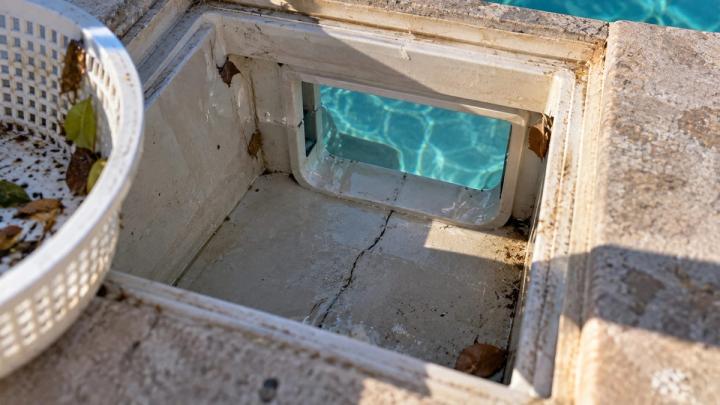
Here is a twist that surprises pool owners: some of the most convincing "structural" leaks are not structural at all. A pool can lose water through underground plumbing, a separated skimmer throat, the main drain, or a leaking pool light conduit, while an innocent surface crack takes the blame.
The clues point different directions. A plumbing leak often changes with the pump: worse with it running points to the pressure side, worse with it off can point to suction lines. Structural leak sources drip steadily no matter what the equipment does. Soggy spots around the pool, near the equipment pad, hint at pool plumbing. Water loss that stops at a specific water level in your pool points to a leak at that height, often a skimmer or fitting rather than the shell.
This is why every Level Up job starts with full pool leak detection: pressure testing each line, listening through the shell, and dye testing every suspect from the skimmer to the main drain. Find and fix means finding first. If it turns out to be a pipe, our trenchless PipePoxy repair fixes underground plumbing without excavation. If the pool still leaks after someone else's patch job, this step is exactly what was skipped.
What Structural Pool Leak Repair Costs and How Long It Takes
Repair costs for structural work depend on what detection finds: crack length, location, access, and whether plumbing repairs ride along. National cost guides put structural pool repairs at the higher end of pool leak repair pricing, typically four figures, while minor leak repairs at fittings run far less. We do not quote ranges we cannot stand behind. We quote your pool, flat rate, in writing, after detection, so you can compare the repair estimate against any other reputable pool bid with confidence.
Timeline runs shorter than most pool owners fear. Detection takes a few hours. A typical staple repair is measured in days, not weeks, including draining the repair area and cure time, not the months a full renovation takes. Before you hire any pool contractor for structural work, ask three questions: How will you confirm the leak location before repairing? Does your method resist future ground movement or just fill the crack? And what warranty comes with the repair work? The best pool repair companies answer all three in writing.
Structural Repair in Every Level Up Territory
Ground moves differently in every market we serve, but it moves everywhere, and it is the number one reason structural leaks occur:
- Colorado (Littleton): 150+ freeze-thaw cycles a year plus bentonite clay. (720) 783-5380, view territory
- Columbus, OH: Freeze-thaw winters and saturated spring soil. (380) 220-6760, view territory
- North Atlanta, GA: Expansive Georgia red clay. (678) 336-8647, view territory
- North Austin, TX: Shrink-swell black clay and limestone. (512) 357-7272, view territory
- Pasco County, FL: Shifting sand and karst ground. (727) 513-2525, view territory
- South Austin, TX: Hill Country limestone and drought cycles. (737) 520-4735, view territory
- West Las Vegas, NV: Desert soil settling under newer builds. (725) 425-5708, view territory
Whether you own a new pool with a settling crack or a 30-year shell with a history, the process is identical: detect, document, repair, flat rate.
Fix It Once
Structural pool leak repair done right is not a patch cycle. It is one properly diagnosed crack, one compression repair, and a pool that holds water again for the long haul.
Stop paying to fix the same crack twice. Call Level Up Leak Detection at (866) 420-5383, find your local territory, or schedule your leak detection online. We will find it, and we will fix it right the first time.