Somewhere along the way, pool owners got the idea that fixing a leak means draining the pool. Empty it, find the problem, fix it, refill it, rebalance it, and eat a water bill the size of a car payment.
Here is the truth from a team that finds and fixes leaks every day. Most of the time, we never drain a drop. We find the leak with the pool full, and we fix a pool leak without draining in the majority of cases.
This post breaks down which leaks can be fixed in a full pool, which ones truly need the water level dropped, and why draining a pool at the wrong time can cause a bigger problem than the leak itself.
Why We Almost Never Drain a Pool to Fix a Leak
Draining feels logical. You cannot see the problem, so empty the pool and look. But an experienced local pool leak company treats draining as a last resort, for two reasons.
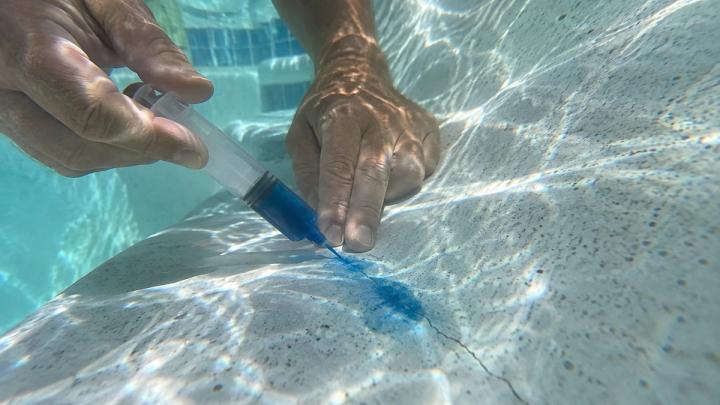
First, it is usually pointless. Modern leak detection finds the exact source with the pool completely full. We use LeakTronics hydrophone equipment to listen for the leak through the water and a dye test to confirm it visually. If those don't isolate it, we pressurize the suspect plumbing line and check it on its own. The water is not in the way. The water is what carries the sound.
Second, draining can be flat-out dangerous for the pool. A pool shell is built to hold water in, not to hold ground out. Drop the water level in wet ground or a high water table and hydrostatic pressure can crack the floor or literally lift the shell. Pools pop out of the ground this way every year. That little valve at the bottom of the main drain, the hydrostatic relief valve, exists for exactly this reason, and it can clog or fail just when you need it.
"The worst calls we get are not leaks. They are pools someone drained to go find a leak. A hairline crack you could have fixed for hundreds turns into a floated shell you cannot fix at all. If a company's first move is to drain your pool, get a second opinion before they touch a valve."
Level Up Leak Detection team
Losing water and not sure why? Call Level Up Leak Detection at (866) 420-5383 or schedule online. Detection happens with your pool full.
First, Confirm the Pool Is Actually Leaking
Before anyone fixes anything, make sure you are chasing a leak and not evaporation. In hot, dry markets, a pool can lose a quarter inch a day to the sun alone.
The bucket test settles it in 24 hours. Fill a bucket with pool water, set it on a step, and mark the water level inside the bucket and on the outside of it. Pump off, wait a day, compare. If the pool dropped more than the bucket, the pool is actually leaking. Our guide on how to determine if your pool has a leak walks through the details.
One more free clue: let the water drop and watch where it stops. If the loss slows or stops at a specific level, the leak location sits right around that line. Stops at the skimmer mouth? Look at the skimmer. Keeps dropping toward the bottom of the pool? Think main drain area, floor, or underground plumbing.
Which Pool Leaks Can Be Fixed Without Draining?
Here is the honest breakdown by leak type. Most of the common failure points in a pool or spa can be repaired underwater or from outside the shell.
Notice the pattern. Whether your pool is gunite, fiberglass, or vinyl liner, the everyday leaks (skimmer, fittings, small tears, plumbing lines) stay wet during repair. The rare exceptions are true structural cracks in concrete or plaster shells and a liner that is past patching.
How We Fix Underground Plumbing Leaks Without Draining or Digging
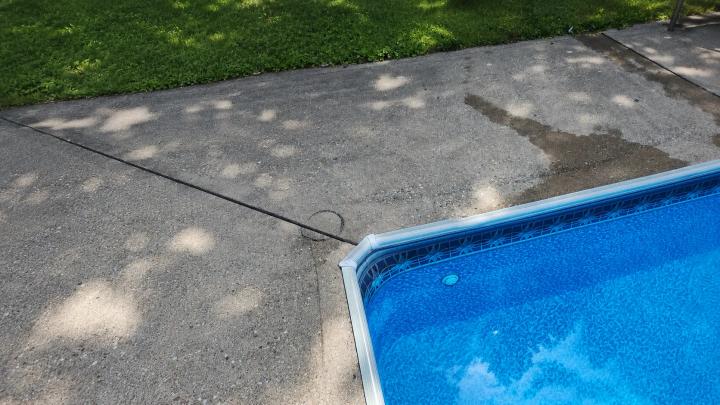
Underground plumbing leaks scare pool owners the most, because the old fix was brutal: excavation. Cut the deck, dig to the pipe, replace the section, then pay again to repair the concrete and landscaping.
That is not how we do it. Level Up uses the PipePoxy system, a trenchless repair developed by LeakTronics for pool plumbing. Here is what a typical repair looks like:
- Pinpoint first. When the plumbing is the suspected source, we pressure-test the suspect line (suction, return line, pool cleaner line, or spa line) to isolate the leaking pipe, then locate the exact source along its run.
- Access without excavation. PipePoxy works through small access points, usually at the equipment pad or a fitting, so the deck and yard stay intact.
- Clean and prep the line. The pipe interior gets cleaned so the repair bonds to sound material.
- Line the pipe from the inside. A three-part epoxy coats the interior of the pipe, sealing small holes, cracks, and even separated joints. It effectively builds a new pipe inside the old one, and it works on the 1 to 2.5 inch PVC and flex lines pools use.
- Verify with a camera and pressure test. We confirm the line holds pressure before we call it done.
The epoxy cures fast. Most jobs take about six hours, and the pool is functional the same day. No trench, no torn-up deck, no drained pool, no re-plumbing quote.
Think you have a pipe leak under the deck? Do not let anyone cut concrete before the line is even confirmed. Call (866) 420-5383 for pool leak detection first.
DIY Underwater Fixes: What Works and Where They Stop
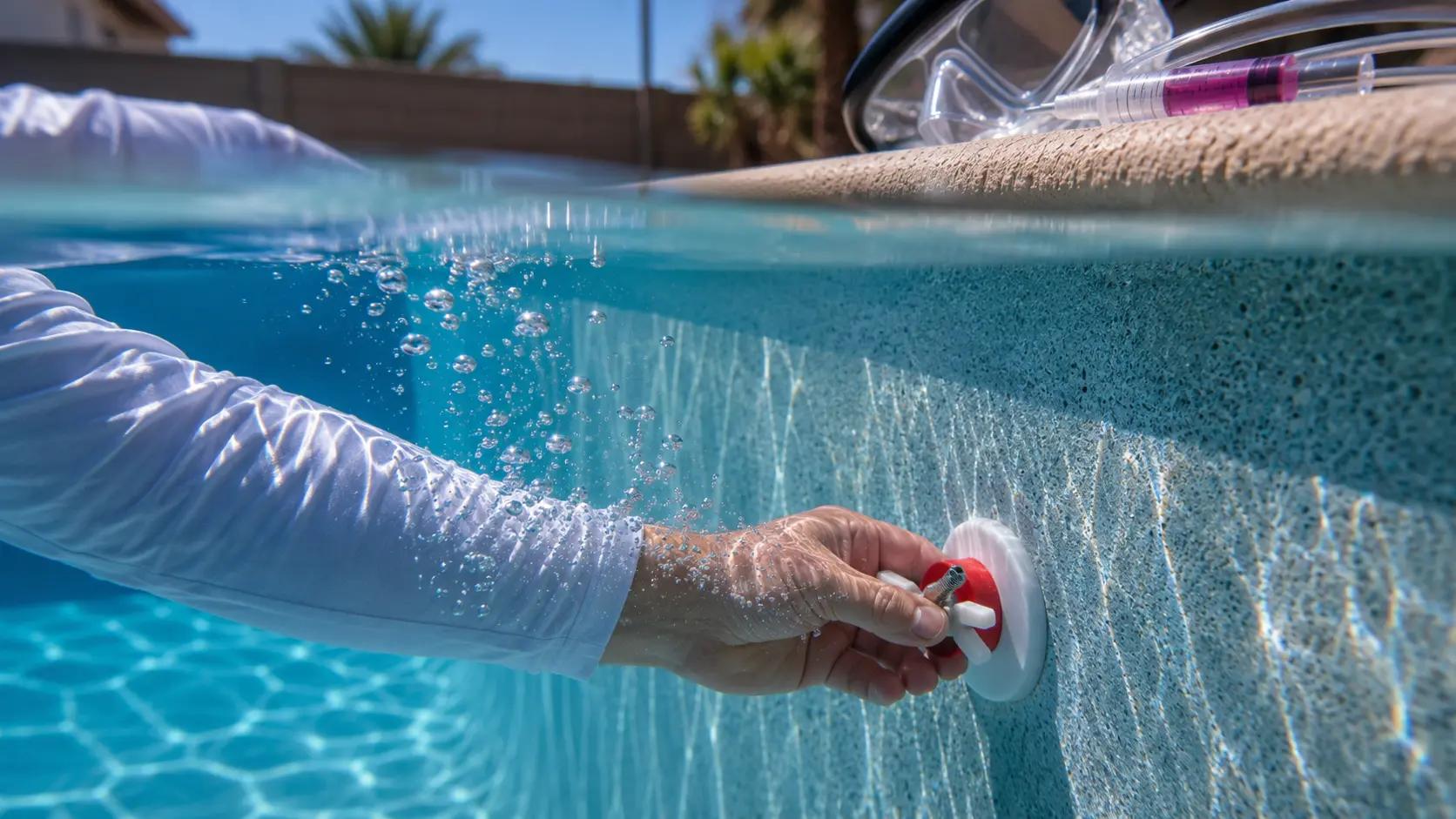
Can a handy pool owner fix a leak without draining? For small leaks in easy spots, yes. Grab goggles or a snorkel and be realistic about the limits.
- Epoxy putty. The workhorse. A two-part pool putty that you knead together and press into a leak at a fitting, a light niche, or a hairline crack. Good putty cures underwater and will harden in place.
- Vinyl patch kit. For small tears and small punctures in vinyl liner pools. Cut a round patch, apply the glue, fold it, and press it over the tear underwater. Wet-rated kits are made to be applied underwater.
- Skimmer sealant. A dab of underwater-rated sealant where the skimmer meets the pool shell can stop a classic skimmer leak. If the faceplate screws are loose on a vinyl pool, snug them first.
- A syringe and dye. Fill a syringe with dye from a squeeze bottle or dye test kit and release it slowly near a suspected area with the pump off. If the dye pulls toward a spot, you found your leak.
Where DIY stops: anything you cannot see. Underground plumbing, main drain lines, leaks behind the shell, and any crack that keeps moving are professional territory. And skip the flex tape. It was not built for permanent underwater structural work, and peeling off a failed tape repair usually makes the next repair harder.
One rule ties it all together: patch what you can see, test to confirm what you cannot. If your bucket test still shows water loss after your patch, the visible flaw was not the real leak.
The Exact Source Is Everything
Every repair above depends on one thing: knowing exactly where the water is going. This is why leak detection comes before repair, always.
A pool has dozens of potential failure points: the floor and walls, skimmer, fittings, lights, the main drain, and every foot of pipe between the pool and the equipment pad. Guessing means patching things that were never leaking. Finding the exact location means one repair, done once.
That is the whole Level Up process for pools and spas: schedule, detect, repair, with flat-rate pricing and a written report. If you missed it, our post on the common signs of a pool leak covers how leaks announce themselves before the water bill does.
No-Drain Leak Detection and Repair in Every Territory
Level Up Leak Detection brings the same full-pool detection and trenchless repair methods to every market we serve, with flat-rate pricing in all of them. Find your local team:
- Colorado (Littleton): (720) 783-5380, view territory
- Columbus, OH: (380) 220-6760, view territory
- North Atlanta, GA: (678) 336-8647, view territory
- North Austin, TX: (512) 357-7272, view territory
- Pasco County, FL: (727) 513-2525, view territory
- South Austin, TX: (737) 520-4735, view territory
- West Las Vegas, NV: (725) 425-5708, view territory
Keep the Water In. We'll Find the Leak.
So, can a pool leak be fixed without draining? In most cases, yes, and in many cases draining would have been the most expensive mistake of the whole job.
Let a certified team find and fix it with the water right where it belongs. Call Level Up Leak Detection at (866) 420-5383, find your local territory, or schedule your leak detection online. We will find it, and we will fix it right the first time.