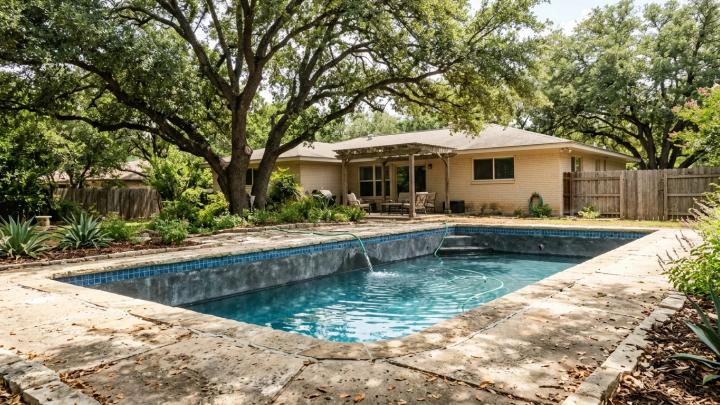
Your swimming pool looks fine on top. The plaster is smooth. The deck looks solid. Yet the water level keeps dropping, and you cannot see why. In neighborhoods like Avery Ranch and across North Austin, the cause is often hidden below grade. When your pool is losing water underground, shifting Texas clay is usually the reason.
This guide explains how that ground movement makes pools lose water, how we confirm an underground leak, and what repair costs really look like.
How Shifting Clay Soil Moves the Ground Around Your Pool
Most of Central Texas sits on heavy clay soil. This is the famous shrink-swell clay, and it acts like a sponge. When heavy rain soaks in, the soil expands. When the Texas heat dries it out, the soil shrinks. That cycle of expands and contracts never stops.
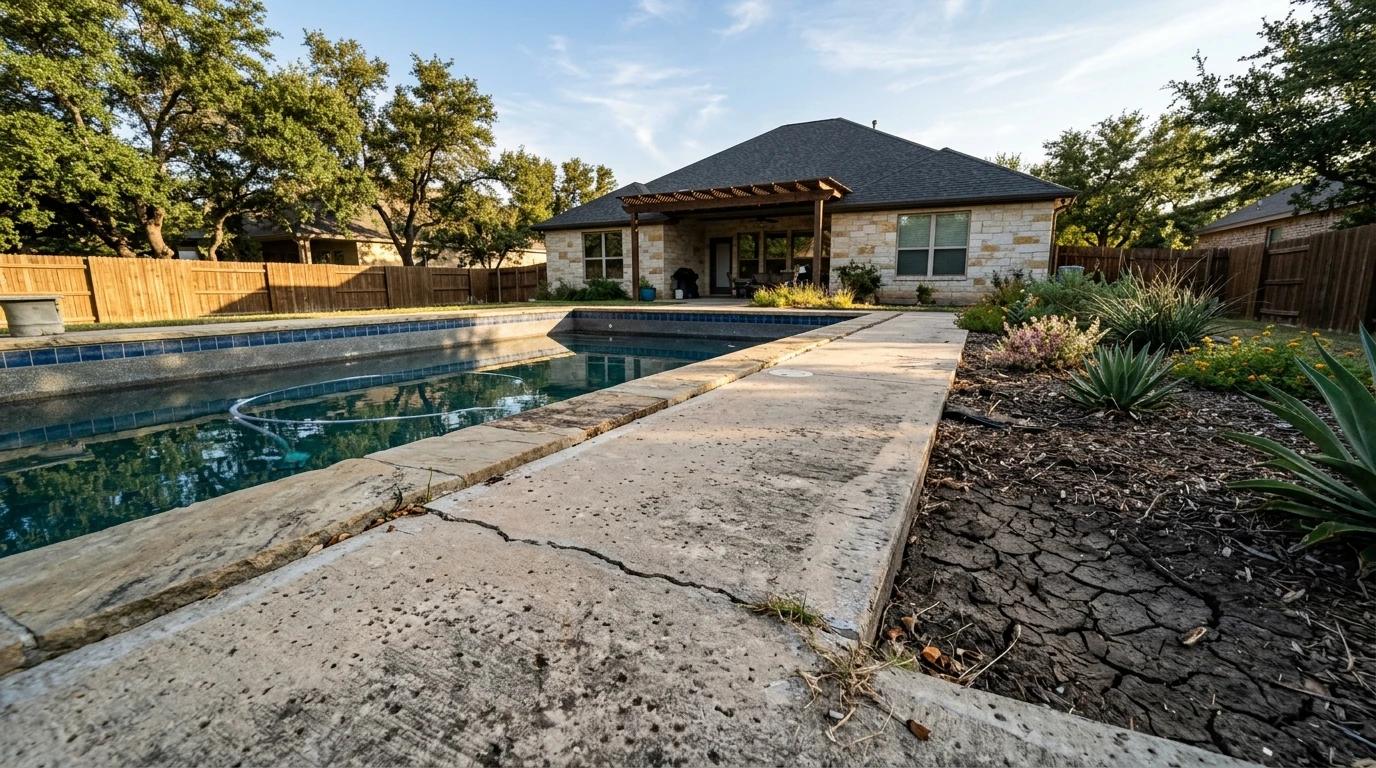
Here is the problem. Your pool shell and its pipes do not move. The soil around them does. Every season of soil movement pulls and pushes on the structure. Over time, that stress opens cracks and pulls fittings apart. Wet clay also creates hydrostatic pressure against the pool wall, which adds even more force. Backfill packed in during pool construction can settle unevenly too, which opens gaps over the years.
This is not a small risk. A Texas state bulletin notes that engineering and geological estimates from the ASCE and the USGS link expansive soils to damage in about a quarter of all U.S. structures, with greater financial losses than floods, hurricanes, and earthquakes (Texas Department of Licensing and Regulation). The same ground that cracks home foundations works on your pool too.
Where Underground Water Loss Starts
When a pool loses water due to soil that keeps shifting, the leak source is rarely on the surface. It hides in the parts you cannot see. These are the spots where the ground around the pool does the most damage.
A single underground leak can waste hundreds of gallons of water in a day. Left alone, that water saturates the surrounding soil, which keeps the clay swelling and cracking. It becomes a loop that gets worse.
Is It a Leak or Just Evaporation?
Before you assume the worst, rule out the heat. Some daily evaporation is normal, and Texas heat with low humidity speeds it up. In extreme heat, pool water loss from the surface climbs even higher. A quick way to check is the bucket test. You float a bucket of pool water on a step, mark both lines, and wait a day. If the pool drops more than the bucket, you likely have a leak.
We cover the full method and the science in our guide on whether the Texas heat or a leak is to blame. Evaporation tends to come and go with the weather. A real underground leak shows steady water loss no matter what.
Signs Your Pool Loses Water Due to Shifting Soil
Most homeowners spot the trouble before they understand the cause. Watch for these clues that point to a structural or plumbing issue below grade:
- Gradual water loss that holds steady on cool, calm days
- Soggy spots or water coming out of the ground near the pool deck
- New cracks or separation in the deck around your pool
- The pool pump loses prime or pulls in air
- Water level drops faster when the pump runs, which hints at return lines
- Settling or gaps where the deck meets the coping
If a few of these match, the heat is not your only problem. Older pools and pools built on raw clay are the most likely to lose water this way.
How We Confirm an Underground Leak
You do not need to drain or dig up your yard to find a buried leak. Our professional leak detection is non-invasive. We test the pool full of water and use proven steps to pin the exact source.
Here is how we work:
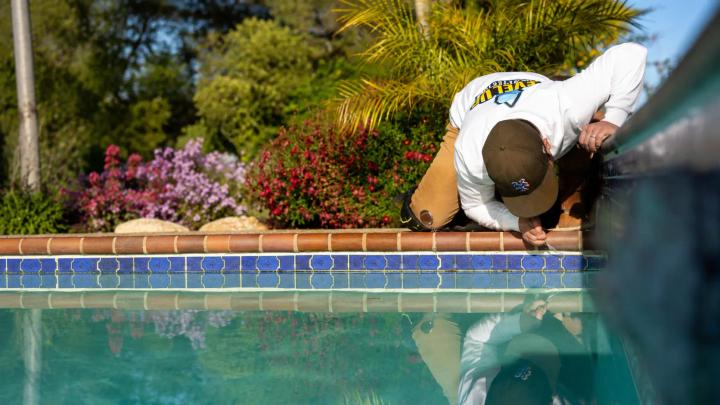
- Listen below grade. We use sensitive leak-tech gear and a submersible hydrophone to hear water escaping from underground pipe and fittings.
- Pressure testing. We isolate the suspect line and pressure test it. This confirms whether a buried underground plumbing issue is the failure point.
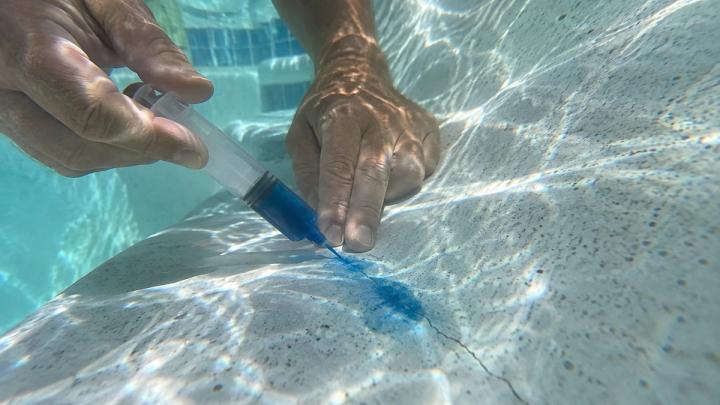
- Dye testing. A drop of dye near a suspect crack shows water moving into the pool shell.
- Mark the leak. Once we have confirmed a leak, we mark its exact location so the fix is precise.
Most visits take about one to three hours. Want a full picture before you buy or sell? A pool inspection catches underground leaks early, before they grow.
Repair Costs and Why Early Action Matters
Underground leaks do not fix themselves. They get bigger. Even a slow drip below grade adds up. Small leaks today can become major repairs tomorrow once the clay keeps moving and the water keeps escaping.
Catching the problem early keeps repair costs down. A loose fitting or a short pipe section is a quick fix. A long-ignored structural leak can mean replaced plumbing and bigger structural damage. Our pool leak detection and repair team handles both. We explain the price up front, with no surprises.
"We will find your leak. Guaranteed." That promise stands behind every underground leak we trace.
This Clay Belt Runs Across Texas
The same shrink-swell ground stretches from Central Texas up into North Texas. The Fort Worth and DFW metros sit on some of the most active clay in the country. So whether you live in North Texas or here in North Austin, the north Texas soil and the Central Texas soil share the same habit. It expands, it contracts, and it stresses every inground pool built on top of it.
Level Up serves pool owners across the state. We bring the same gear and the same process to every job. We also serve nearby North Austin communities like Round Rock and Leander, where clay and limestone meet.
Why North Austin Homeowners Trust Level Up
We are pool leak specialists who know Texas ground. We have traced leaks for more than 30 years, and we use LeakTronics certified tools for reliable results. We understand how local soil conditions, winter freeze, and summer heat all work against a pool over time.
If you suspect structural cracks in the pool shell, we can help with that too. See our guide on lasting gunite crack repair for the full story. You can learn more about our team and our 30 plus years of experience any time.
Frequently Asked Questions
Can shifting clay really make my pool lose water?
Yes. As the soil expands and contracts, it stresses pipes, fittings, and the pool shell. Over time that opens leaks below grade.
How do I know the leak is underground and not evaporation?
Run the bucket test. Steady water loss on cool, calm days points to a leak, not the heat.
Will you have to dig up my deck?
Not to find the leak. We locate it with sound, pressure, and dye while the pool stays full. Excavation is only a last resort for the repair.
How fast can an underground leak get worse?
Quickly. A small leak can waste hundreds of gallons of water a day and keep the clay around your pool swelling and cracking.
Schedule Pool Leak Detection Today
Stop guessing why your pool keeps dropping. If your pool loses water and you think shifting clay is the cause, let our team confirm it and fix it. You get clear answers, a flat rate, and work that lasts.
Call Level Up Leak Detection at (512) 357-7272 or get in touch with our team. We serve Avery Ranch, Round Rock, Leander, and pool owners across North Austin and Texas.
We will find your leak. Guaranteed.