Your pool keeps dropping. You top it off. A few days later, it is low again. Here in Dade City, that worry often comes with a bigger fear. Is it a pool leak, or is a sinkhole forming under my yard? It is a fair question. This part of Florida sits on ground that shifts, dissolves, and sometimes gives way.
The good news for most homeowners: a pool losing water is usually a simple leak, not a sinkhole. But sinkhole activity is real in our area. So it helps to know the warning signs. Below, we explain the risk. We show how to tell a leak from sinkhole activity. And we cover what to do next.
Why Sinkholes in Florida Are So Common
Much of Florida sits on limestone bedrock. Limestone is soft and porous. Acidic groundwater seeps into the ground. Over time, it works to dissolve the rock. This carves out underground spaces year after year. It forms underground voids and cavities in the limestone. These voids sit beneath the surface. These underground cavities keep growing.
Soon the cavity is too big. It can no longer support the weight of the sediment above it. Then the ground collapses into the cavity. That is how sinkholes form. This same process can cause sinkholes near a home.
This karst geology is why sinkholes are common in Florida. But the risk is not the same everywhere. Sinkhole activity is far more common in west-central Florida. It is rare in south Florida. Dade City sits in Pasco County, close to Hernando County. Pasco, Hernando, and Hillsborough counties make up much of Florida's sinkhole alley. So sinkhole occurrences here are higher than in most parts of Florida.
Most sinkholes happen slowly. True sinkholes are less common than many people fear. Still, new sinkholes can open after heavy rain. The Florida Department of Environmental Protection and the Florida Geological Survey explain the science well. Sinkholes form when surface sediment sinks into voids in the rock (Florida DEP). The same agency notes that broken pipes can mimic sinkhole activity. That is why a clear diagnosis matters.
Sinkhole Formation: The Three Types in Florida
Not every sinkhole is a sudden hole that swallows a car. In Florida, there are three main types. Each type of sinkhole forms in a different way. A developing sinkhole often starts small.
Cover-collapse sinkholes get the headlines. They happen fast. The slower types are far more common. Shifting sand, a high water table, and our aquifer all play a role in sinkhole development. Heavy rainfall and long dry spells can both increase sinkhole risk. They change the load on the ground.
Is It a Pool Leak or Sinkhole Activity?
Here is the part that brings most homeowners relief. A steady leak in your pool is far more likely than a true sinkhole. Pools lose water through worn skimmers, cracked plaster, loose fittings, and underground plumbing. None of that means a sinkhole.
How can you tell the difference? Watch the pattern of the loss. A pool leak shows a steady loss. Sometimes it is more than an inch of water per day. The water seeps into the ground around the pool. The land itself looks normal. Sinkhole activity is different. It shows up as ground changes, not just water loss.
Before you assume the worst, rule out the simple stuff. Our guide on whether your pool is losing water to evaporation or a leak walks you through the basics. You can also review the common signs of a pool leak so you know what to look for.
Sinkhole Warning Signs Every Homeowner Should Know
Sinkhole warning signs are about the ground and the structure, not just the pool. Here are common signs of a sinkhole. These early warning signs are worth knowing if you own a home in Florida:
- Structural cracks in walls, the foundation, or the pool deck
- Small cracks that keep growing wider over weeks
- Doors and windows that stick or no longer close right
- A dip or depression in the yard, driveway, or land near the pool
- New drainage patterns or water pooling where it never did before
- Sudden ground collapse or a hole that opens with no clear cause
- Other odd changes around your home, like a leaning fence or tree
One or two small cracks alone rarely mean a sinkhole. A sudden, catastrophic ground collapse is rare. Still, watch for several signs at once. If they show up with steady water loss, get a professional look. Sinkhole damage is easier to manage when caught early.
How Leak Detection Helps You Find the Truth
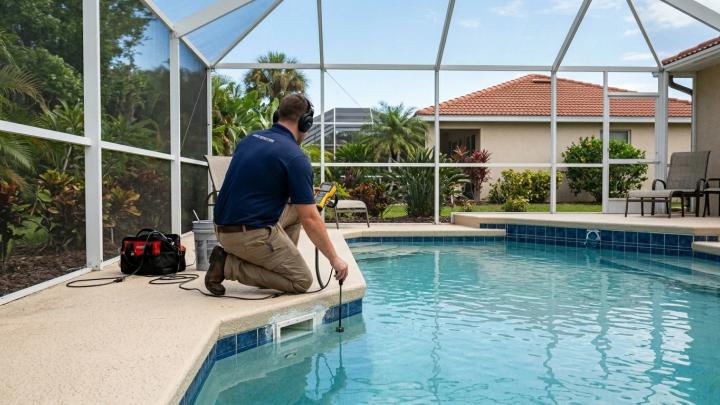
Guessing is stressful. A clear answer is not. The fastest first step is to confirm whether your pool is actually leaking. Our professional pool leak detection in Dade City is non-invasive. We test the pool full of water. We pinpoint the leak source. And we never dig up your yard.
Here is what that buys you:
- If it is a leak, we find it and explain your repair options. Most fixes are simple. We offer clear repair solutions on the spot, and our pool repair team handles the rest.
- If the pool is not leaking, that is useful too. It points the cause elsewhere. Then you can bring in a geotechnical engineer for sinkhole testing.
A full pool inspection can also catch small problems early. That helps you avoid bigger property damage. Either way, you stop guessing and start to protect your property.
Sinkholes and Florida Insurance, in Plain Terms
Sinkhole insurance in Florida can be confusing. Here are the basics, kept simple. Every property insurance policy in the State of Florida must cover a catastrophic ground cover collapse. That term is narrow. It applies only in extreme cases. The ground must collapse. A depression must show. The structure must be damaged. The building must be condemned.
Broader sinkhole coverage is different. Under Florida law, insurers must offer it for an extra premium. But you have to choose it. Florida Statutes also set the steps for sinkhole claims. Say structural damage looks like sinkhole activity. The insurer then brings in a professional geologist or engineer. They test the ground and confirm the cause.
Filing an insurance claim has clear steps. If you suspect a sinkhole, contact your insurance company promptly. Ask about your coverage. We are pool leak experts, not lawyers or insurance agents. Treat this as general information, and confirm the details with your insurer.
Why Dade City Homeowners Trust Level Up
We have dealt with leaks for more than 30 years. We use LeakTronics certified gear to find the leak source fast. We are licensed and insured in Florida. Our business license is RPM-009945. We know how local geology, shifting sand, and limestone ground affect pools.
Here is what one customer shared:
"Great service. Very knowledgeable. Fair pricing. Did not try to up sell. Highest recommendation." Rick Deschamps
We proudly serve Dade City and nearby Pasco County. That includes Zephyrhills and Wesley Chapel. You can learn more about our team and our promise on our about page.
Frequently Asked Questions
Does a pool losing water mean I have a sinkhole?
Usually not. Most pools lose water from a normal leak, like a worn skimmer or cracked plaster. A sinkhole is far less likely, though it is worth ruling out in our area.
Can a pool leak look like a sinkhole?
Yes. State experts note that broken pipes can mimic sinkhole activity. That is why leak detection is a smart first step to find the real cause.
What should I do if I see sinkhole warning signs?
Note the signs. Watch for structural cracks and ground depressions. First, call a pro to check for a pool leak. If a sinkhole is still suspected, contact a geotechnical engineer and your insurer.
How fast can you find a pool leak?
Most visits take about one to three hours. We test the pool full and mark the exact leak source.
Schedule Pool Leak Detection in Dade City
Stop losing sleep and water. Is your pool dropping? Worried about sinkhole risk? Let our team find the real cause. You get clear answers, a flat rate, and honest advice.
Call Level Up Leak Detection at (727) 513-2525 or get in touch with our team. We serve Dade City, Zephyrhills, Wesley Chapel, and pool owners across Pasco County, Florida.
We will find your leak. Guaranteed.