You top off the pool. A few days later, the water level is low again. So you drain a little, refill, and hope it holds. It never does. Here is the hard truth for Brookhaven pool owners: draining and refilling does not fix a pool leak. It only hides the problem while water keeps escaping. The only real fix is to find the leak source and repair it.
If your pool is losing water and you keep refilling, this guide is for you. We will explain why the refill habit fails, how to tell a leak from evaporation, and how professional pool leak detection in North Atlanta ends the cycle for good.
The Problem Brookhaven Homeowners Keep Running Into
Brookhaven sits on Georgia's clay-heavy soil. That soil shifts with the seasons. Add winter freeze-thaw cycles, and you get significant ground movement that stresses pool structures and plumbing lines. Over time, this can crack a pool shell or pull a fitting loose underground.
When that happens, the water level keeps dropping. A steady drop in water level usually means water is escaping somewhere below the surface. Many homeowners react the same way. They add water. When it drops again, they drain a bit and refill, thinking fresh water or a chemical reset will help. It will not. A leak is a physical hole or crack. Water keeps leaving through it no matter how many times you refill.
There is also a real cost to ignoring it. According to the U.S. EPA's WaterSense program, a typical uncovered pool can lose 12,000 to 31,000 gallons of water per year to evaporation alone. A leak adds far more on top of that. That shows up on your water bills fast.
Why Draining and Refilling Never Fixes the Leak
Draining your pool feels like progress. It is not. Here is what actually happens when you rely on the refill cycle:
- The leak stays open. Refilling adds water above the crack or bad fitting. The water loss starts again right away.
- You mask the warning signs. Constant topping off hides how fast the pool is really losing water. That makes the leak harder to track later.
- Damage spreads. Leak water seeps into the ground near the pool. That can wash out soil, sink your pool deck, and cause more ground movement.
- Costs climb. Higher water bills, wasted chemicals, and a bigger repair down the road. A small crack today can mean pool resurfacing tomorrow.
In short, refilling treats the symptom. It never treats the source of the leak. To stop the loss, you have to pinpoint the exact location and patch it.
Is It a Leak or Just Evaporation?
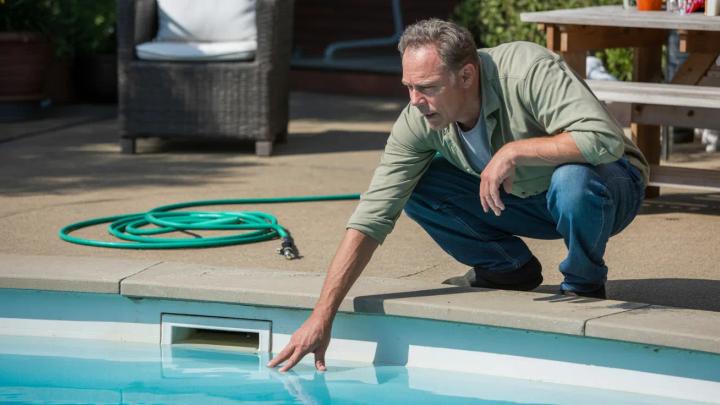
Before you assume the worst, confirm that your pool may have a leak. The easiest way is the bucket test. It is simple and free.
- Fill a bucket with pool water and set it on a pool step so it floats or sits level.
- Mark the water level inside the bucket and the water level on the outside, on the pool wall.
- Wait 24 hours. Do not swim, backwash, or run water features.
- Compare both marks.
If the pool level drops faster than the level inside the bucket, the difference is not evaporation. Your pool is losing water to a leak. If both drop the same amount, the water loss is actually normal evaporation.
The bucket test tells you that you have a problem. It does not tell you where. For that, you need a leak specialist.
Where Pool Leaks Actually Happen in Brookhaven
Leaks occur in a handful of common spots. Leaks in pool shells and plumbing leaks are the two main groups. Knowing them helps you understand why a quick patch on your own rarely works. The most common pool leak locations include:
- Skimmer: Cracks between the skimmer and the pool wall are a frequent leak source.
- Return line and return jet: The return line pushes water back into the pool. A bad seal here means slow, hidden water loss.
- Main drain: A leak at the main drain or its valve sits deep and is hard to reach.
- Plumbing lines: Underground pipe leaks can drain thousands of gallons before you notice low water levels. An underground leak like this often hides for weeks.
- Pool shell and pool wall: Concrete pools can crack from ground movement and freeze-thaw stress.
- Pool light: The conduit behind a pool light is a sneaky, common leak point.
Some of these are obvious signs. Many are not. A leak underground or a slab leak gives almost no surface clue until the damage is significant. Wet, soft soil can indicate that the leak is below ground. That is why guessing wastes time and money.
How Professional Leak Detection Pinpoints the Exact Location
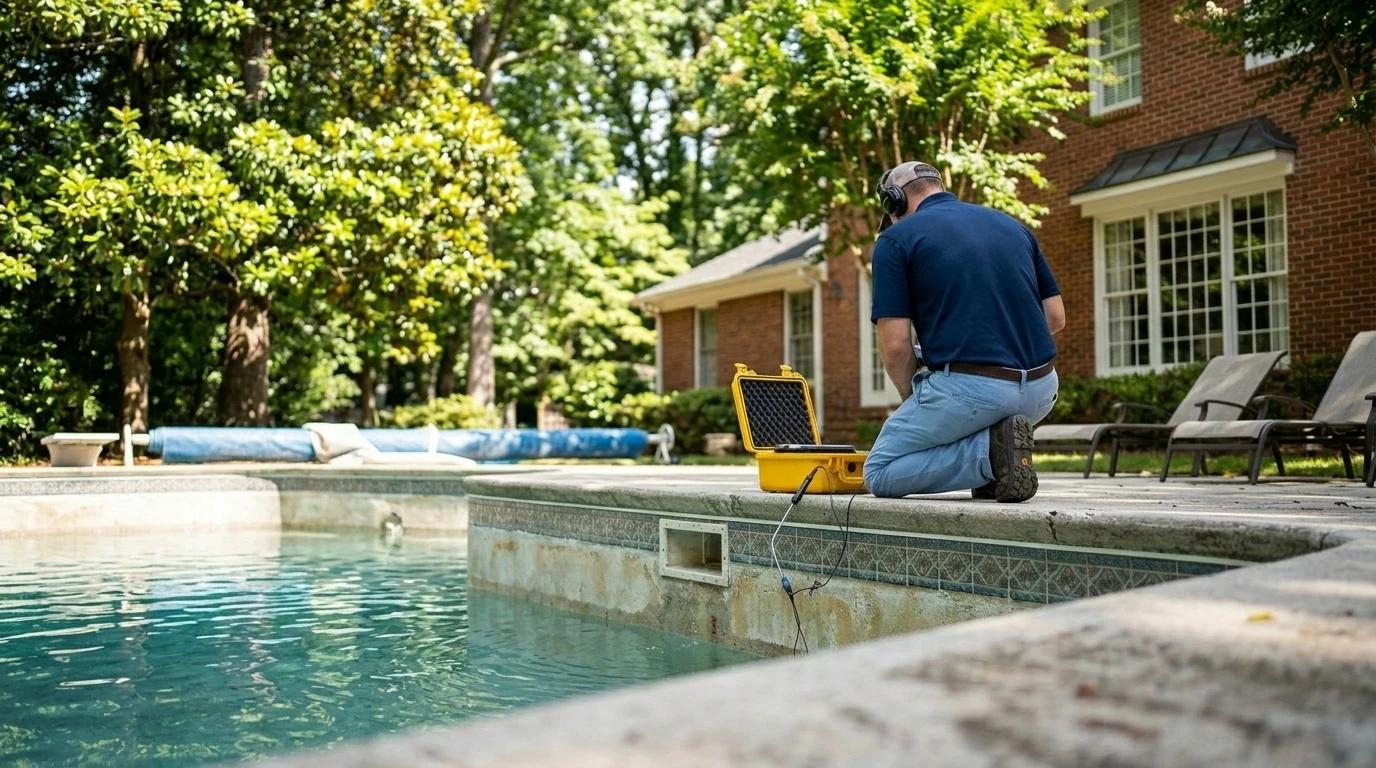
This is where Level Up Leak Detection changes the game for Brookhaven homeowners. Our technicians use advanced detection technology to find the leak without tearing up your yard. We do not guess. We confirm.
Here is how professional leak detection and repair works:
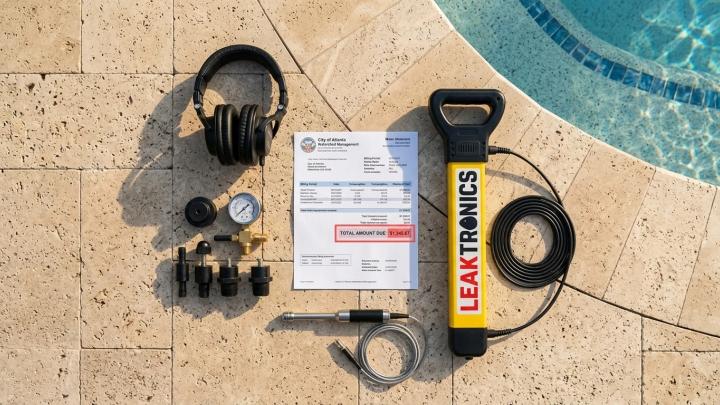
- Listening equipment picks up the sound of water escaping through a crack or fitting.
- Pressure testing isolates the suspect plumbing line to show exactly where it is failing.
- Dye testing confirms a suspected leak at the shell, skimmer, or pool light by tracing where the dye pulls.
- A full report documents the exact leak location and what the repair will involve.
This non-invasive leak detection service protects your pool deck and landscaping. It also gives you a clear repair estimate before any work starts. If you want a deeper look at your whole pool first, a full pool inspection can catch problems early, before there is water escaping at all.
Pro tip: If your water bills jumped and you cannot spot a cause, your pool is a likely culprit. Want to know what else to watch for? Read our guide on the common signs of a pool leak.
Find and Fix: What Real Repair Looks Like
Once we pinpoint the exact location, we move to the fix. The right repair depends on the leak source, and the work can vary depending on pool size. Common pool repairs include:
- Sealing skimmer and return line cracks with proper bonding materials.
- Patching a pool shell crack or applying pool putty on a small surface leak.
- Repairing leaks in underground pipes with targeted, low-dig methods.
- Replacing failed fittings and valves at the equipment pad.
For bigger structural cracks, pool resurfacing may be the long-term answer. We walk you through every option. We offer full pool repair services for both residential and commercial pools across North Atlanta, so no pool is too complex. After the fix, your pool remains full and ready to swim. See our full range of pool leak repair services to understand what a lasting fix involves.
What Our Brookhaven Customers Say
We let our work speak, but our customers say it best:
"Great experience with this pool leak detection company! They were on time, professional, and knew exactly what they were doing. They found the leak quickly and explained everything clearly. Super smooth process and fair pricing. Definitely recommend!" Ashley Garcia
Why Brookhaven Homeowners Choose Level Up Leak Detection
We have been dealing with leaks for more than 30 years. We are LeakTronics certified, licensed, and insured. We know Brookhaven's clay soil, its older inground pools, and the freeze-thaw cycles that crack concrete pools here.
That local experience matters. A leak in Brookhaven is not the same as one in a dry climate. The soil moves more, so the source of leaks is often underground. Our team knows where to look first. You can learn more about our process and standards on our about page.
We also serve nearby communities, so help is close by. If you are just over the line in Dunwoody or in Sandy Springs, the same expert crew has you covered.
Ready to Stop Refilling Your Pool?
If you suspect a leak, stop draining and refilling. Every refill just buys the leak more time. The faster you find and fix it, the less you spend on water, chemicals, and repairs.
Level Up Leak Detection will pinpoint the exact location and give you a clear plan. Call us at (678) 336-8647 or request a free estimate today. We serve Brookhaven, Sandy Springs, Roswell, Alpharetta, Dunwoody, and the wider North Atlanta metro.