Here is the classic pool liner repair story. A pool owner spots a small tear, buys a patch kit, follows the directions, and the patch sticks perfectly. Two weeks later the water level is still dropping.
The patch was fine. It was just on the wrong hole.
This guide covers vinyl pool liner repair the way we approach it in the field: how to patch a liner underwater without draining your pool, which repair kits actually hold, and the honest signs that a liner is past patching. And most importantly, how to make sure you are patching the leak instead of just the damage you happened to see.
The Patch Is the Easy Part. Finding the Leak Is the Job.
Most providers won't say this about pool liner leaks, but it is the whole game: vinyl liners rarely leak where you are looking.
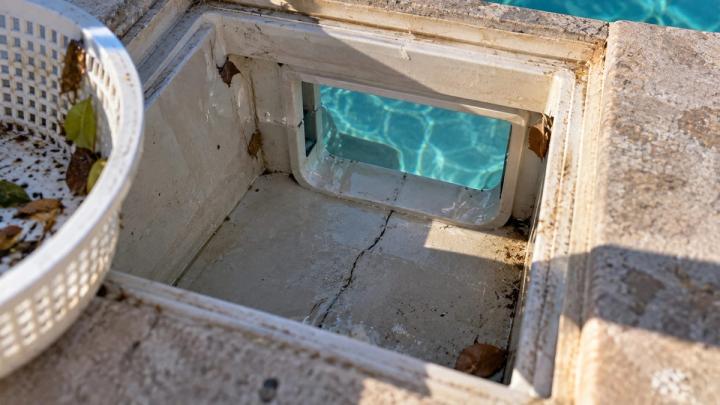
A liner can spring a pinhole the size of a pencil tip, invisible from the deck, and lose hundreds of gallons a week. Meanwhile the obvious tear that caught your eye may sit above the waterline or never leak at all. The most common culprits we find are not out in the open. They hide at the skimmer gasket, around return fittings, at the light, in seams, and along the corners where the floor meets the walls.
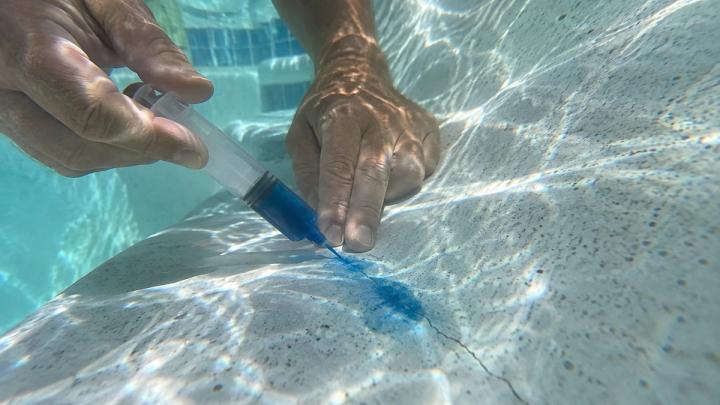
Here is a quick way to narrow it down yourself. Shut the pump off and let the water drop. If it stops falling at a specific level, the leak sits right around that line. If it keeps falling toward the bottom of the pool, think floor, main drain area, or plumbing. Then confirm the exact spot with a dye test an inch from the suspected area.
If you cannot find it, that is not a you problem. It is a tools problem. Our LeakTronics-certified techs find liner pinholes with listening equipment and dye, with the pool full, as part of every pool leak detection visit.
"We have pulled a lot of perfect patches off of pools that were still leaking. The homeowner did everything right except the location. Patch second. Find first. That order is the difference between fixed and frustrated."
Level Up Leak Detection team
Losing water and can't find the hole? Call Level Up at (866) 420-5383 or schedule online. We find it before anything gets patched.
How to Patch a Pool Liner Underwater (No Draining Required)
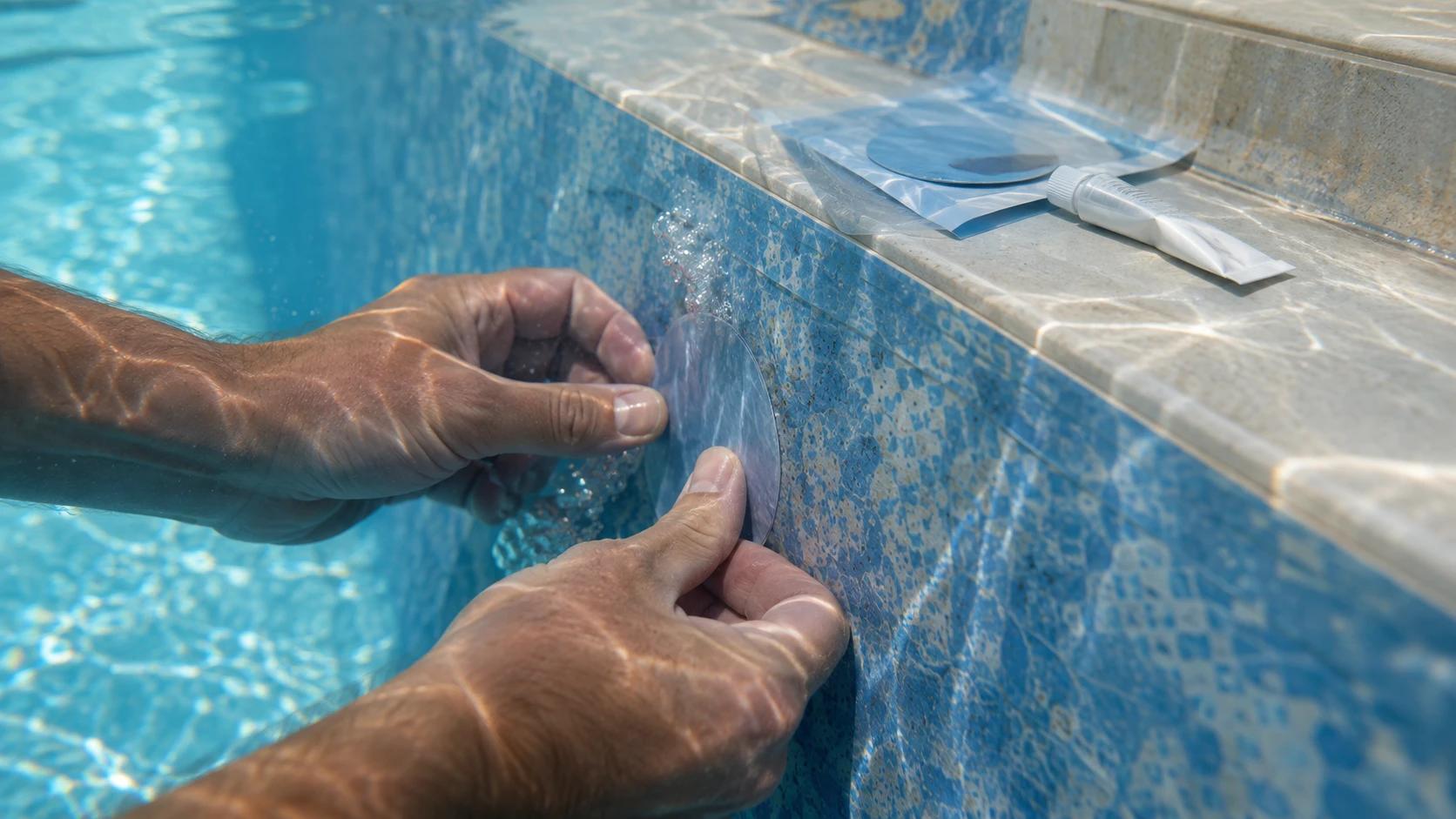
Good news for every vinyl pool owner: liner patches are designed to be applied under water. Never drain a liner pool for a small repair. Without water pressure holding it in place, a liner can shrink, wrinkle, or shift, turning a five-dollar fix into a new liner.
Here is the process for a wet patch that holds:
- Clean the damaged area. Rub the liner around the tear with a clean cloth so the adhesive has a clean surface. Algae and sunscreen film kill patches.
- Cut the patch round. Cut your patch material into a circle or round the corners. Square corners are where the edges start peeling first.
- Size it generously. The patch should extend at least two inches past the tear in every direction.
- Apply the glue. Coat the patch with vinyl adhesive (vinyl cement), fold it glue-side-in like a taco, and bring it down to the tear. The fold keeps water off the adhesive on the way down.
- Unfold and press. Open the patch over the tear, press from the center outward to push out water and air, and smooth the edges down hard.
- Hold, then leave it alone. Press for a minute or two, then keep swimmers off it while it sets. A full cure takes about 24 hours, so resist the urge to pick at the edges.
For deep underwater repairs at the bottom of my pool, as many owners describe it, the same steps apply. You just need goggles, a couple of dives, and patience. For tears bigger than a few inches, patch both sides if you can reach behind the liner, or call a pro, because large vinyl tears spread.
Choosing a Pool Liner Repair Kit
The pool aisle sells several kinds of pool liner repair kits, and they are not interchangeable. Here is what each one is actually for:
A few buying tips from the field. Check that the kit includes real vinyl cement rated for underwater use, not just dry-surface glue. Match thicker patch material to inground liners and lighter material to an above-ground pool. And buy the bigger kit; if the liner tore once, having extra patch material on hand is cheap insurance for basic pool maintenance.
One warning: an above-ground pool with a tear near the bottom deserves fast attention. Water escaping behind a ground pool liner washes out the sand or foam base underneath, and a wrinkled, sagging floor costs far more to fix than the patch would have.
When a Patch Won't Hold: Signs You Need a Pro (or a New Liner)
Patching a pool liner works beautifully on sound vinyl. It fails predictably in these situations:
- The leak is at the skimmer, a fitting, or the light. These leaks live at gaskets and faceplates, not in the vinyl itself. They need resealing or new gaskets, not a patch over the top.
- The tear sits in a seam or a tight corner. Patches struggle to bond across seams and curved corners. This is a pro repair.
- The edges are peeling on your previous patches. Lifting edges mean the adhesive is done or the vinyl around it is too degraded to grip.
- The liner is brittle or heavily faded. Vinyl gets stiff with age, sun, and chemicals. Brittle vinyl tears next to the patch. At that point every repair buys you a season, not a solution.
- The pool is still losing water after a solid patch. Then the real leak is somewhere else, often in the plumbing, and no amount of patching a pool liner will stop it.
- You are patching your patches. Three or more patches in different spots is a liner telling you it is finished. A new liner beats a swimming pool liner quilt every time.
The same logic applies to a leaking hot tub or spa with a vinyl interior. Small punctures patch well. Seam failures and brittle vinyl do not.
Seeing any of these? Get the pool tested before you spend another dollar on kits. Call (866) 420-5383 and we will tell you honestly whether it is a patch, a repair, or replacement time. Our pool repair team gives you the answer in writing with a flat-rate quote.
Pool Liner Leak Help in Every Level Up Territory
Vinyl liner pools are everywhere in some of our markets and rare in others, which changes what "normal" liner wear looks like. In Columbus, Colorado, and North Atlanta, liners are common and freeze-thaw winters age them fast. In Austin, Las Vegas, and Pasco County, in-ground pools are mostly gunite, but liner pools, spas, and hot tubs still dot every neighborhood, and UV exposure is the liner killer there.
Wherever your pool is, the process is the same: find the leak with the pool full, fix it right, flat rate. Find your local team:
- Colorado (Littleton): (720) 783-5380, view territory
- Columbus, OH: (380) 220-6760, view territory
- North Atlanta, GA: (678) 336-8647, view territory
- North Austin, TX: (512) 357-7272, view territory
- Pasco County, FL: (727) 513-2525, view territory
- South Austin, TX: (737) 520-4735, view territory
- West Las Vegas, NV: (725) 425-5708, view territory
Patch Smart, Not Twice
A well-placed patch can add years to a vinyl liner. The keys are simple: confirm the leak location first, use a real vinyl pool liner repair kit with underwater adhesive, round the corners, and respect the cure time. And when the liner starts telling you it is done, listen.
Not sure where your water is going? That is the part we do best. Call Level Up Leak Detection at (866) 420-5383, find your local territory, or schedule your leak detection online. We will find it, and we will fix it right the first time.