Your pool looks a little lower than yesterday. You top it off. A few days later, it is low again. Is it just summer heat, or do you have a pool leak? If you live in Columbus or any nearby city like Dublin, Westerville, or Powell, you are not alone. Many Central Ohio pool owners face this same worry every season. The good news is, you can find a pool leak early with a simple at-home checklist. This guide walks you through four easy steps to check for pool leaks before you call a pool pro. We will also share when to bring in professional leak detection for help.
Warning Signs Your Columbus Pool May Have a Leak
Before you start the bucket test or dye test, look for these warning signs. Any one of them could indicate a leak.
- Water level dropping faster than usual: A pool can lose about a quarter inch of water per day to evaporation. More than that may signal a leak.
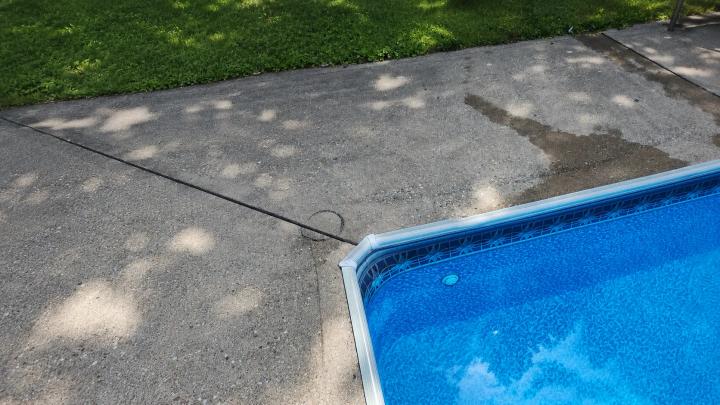
- Wet or muddy spots around the pool: Soft ground near the equipment pad or pool deck often means underground plumbing leaks.
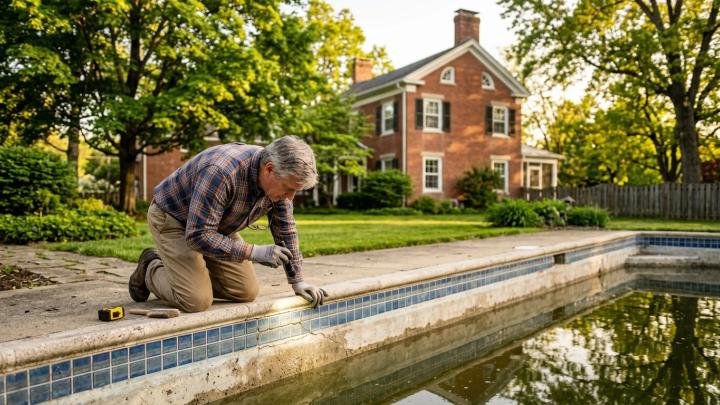
- Cracks in the pool surface: New cracks in the pool shell, tile line, or pool wall can let water out fast.
- High water bills: If your bill jumps but nothing else changed, you may have a leak somewhere.
- Bad water chemistry: A leaky pool dilutes chemicals. If you cannot keep your levels stable, it could indicate a leak.
- Air in the return lines: Bubbles in the jets when the pump is running can mean a suction-side leak.
- Settling pool deck: Standing water under the deck washes out soil. Cracks and sinking spots follow.
If you see any of these signs of a pool leak, run the four steps below. Catching a pool leak early saves money and stops bigger damage.
Step 1: Mark the Water Level and Track Water Loss
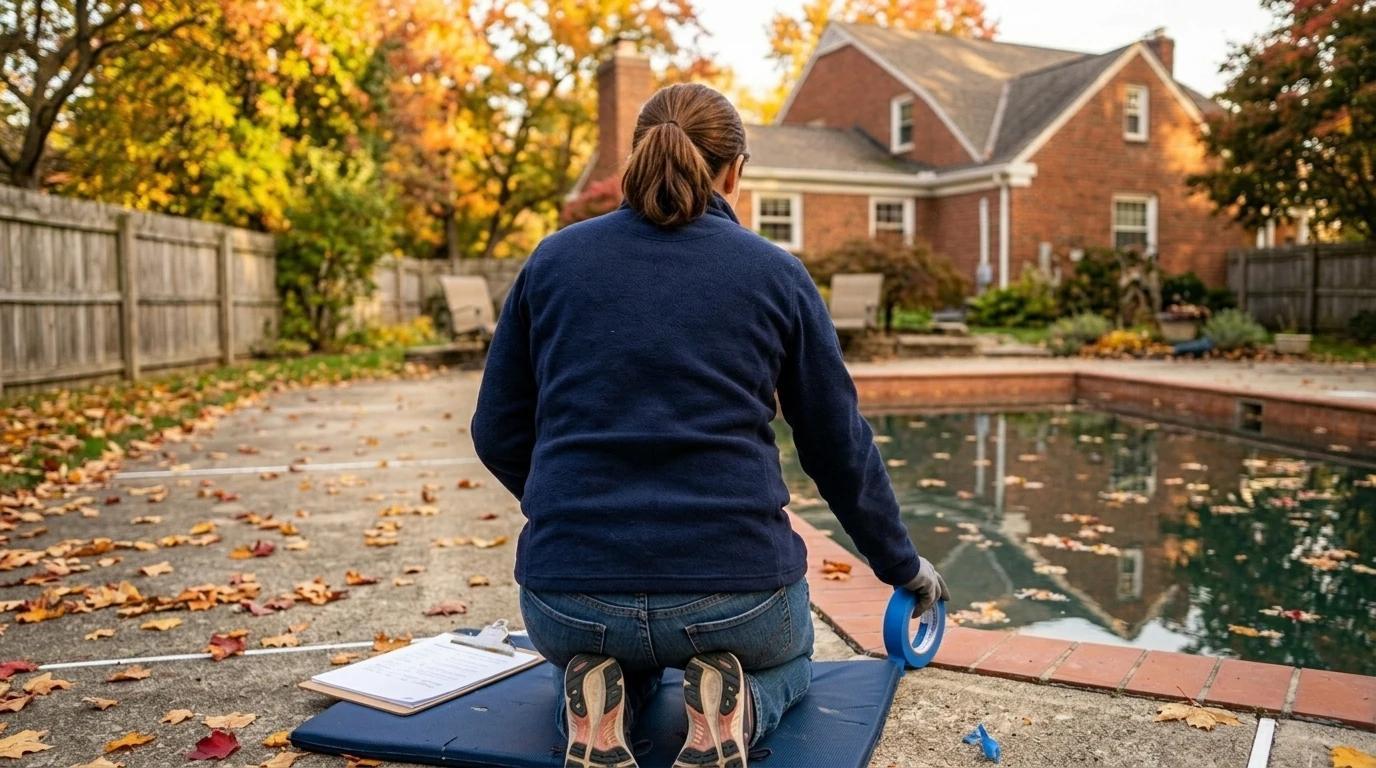
This is the easiest pool leak detection step. Grab a piece of painter's tape or a grease pencil.
- Turn off any auto-fill device. Auto-fill hides water loss.
- Mark the water level at the tile line or skimmer.
- Wait 24 hours.
- Measure how far the water level dropped.
A small drop is normal. A larger drop could mean your pool is losing water from a leak. If the water level keeps dropping faster than usual day after day, move on to Step 2.
Step 2: Run the Bucket Test to Confirm a Leak vs Evaporation
The bucket test is the gold standard for pool owners. It tells you if you have real water loss or just evaporation. Columbus summers are humid but warm, so some evaporation is normal. According to the <a href="https://www.epa.gov/watersense/pool-water-efficiency" target="_blank" rel="noopener">U.S. EPA WaterSense program</a>, an uncovered 500-square-foot pool can lose between 12,000 and 31,000 gallons of pool water per year to evaporation alone. That is a lot, but a real leak will lose far more.
How to do the bucket test:
- Fill a 5-gallon bucket about three-quarters full with pool water.
- Place the bucket on the pool steps. The water level inside the bucket should match the pool water level outside.
- Mark both water lines with tape.
- Turn off the pump and any auto-fill.
- Wait 24 hours. Then compare the two lines.
If both lines drop the same amount, it is just evaporation. If the pool drops more than the bucket, the bucket test confirms a leak exists. That extra pool water loss is your sign to move on to Step 3 and find where the leak is.
Tip: Run the bucket test twice. Once with the pump on for 24 hours. Once with the pump off. If the pool loses more water with the pump on, you likely have a return-side plumbing leak. If it loses more with the pump off, the leak is likely in the main drain or pool shell.
Step 3: Use a Dye Test to Check for Pool Leaks in the Shell
A dye test helps you find the leak location in the pool surface or fittings. You will need leak detection dye or even red food coloring.
Suspected leak spots to check:
- Around the skimmer (a very common leak point in older pools)
- Near each return jet fitting
- Around the main drain in the deep end
- The pool light niche
- Any visible cracks in the pool wall or floor
- Tile line and bond beam
How to do a dye test:
- Make sure the pump is off so water is still.
- Get close to a suspected leak spot. Stay still in the water.
- Squirt a small amount of dye next to the spot.
- Watch the dye. If there is a leak, the dye gets pulled into it like a tiny current.
A dye test works best for cracks in the pool, skimmer separations, and light niche leaks. It does not work well for underground plumbing leaks. For underwater pool spots that are hard to reach, this is when many pool owners call a pro.
Step 4: Test for Plumbing Leaks With the Pump On vs Off
If your bucket test confirmed a leak but the dye test came up empty, the leak is likely an underground leak in your pool's plumbing. Plumbing leaks happen in supply lines, return lines, skimmer lines, or the main drain line. These plumbing lines run under your pool deck or yard.
Quick at-home plumbing leak check:
- Run your pump for 24 hours. Mark the water level.
- Then turn the pump off for 24 hours. Mark again.
- Compare the two water level drops.
Loses more water with pump on? That points to a pressure-side return line leak. Loses more with pump off? That suggests a suction-side or main drain leak.
You can also walk the equipment pad. Look for drips at pump unions, filter seals, and heater ports. Standing water near the equipment pad is a clear sign of a leak. Sadly, this DIY plumbing check has limits. To pinpoint leaks in an underground pipe, you need pressure testing and electronic gear. That is the job of a professional pool leak detection service.
Common Types of Pool Leaks We Find in Columbus
Columbus pools face a tough mix of climate and soil. Pools in Central Ohio deal with three forces no Sun Belt pool faces: freeze-thaw winters, glacial-till clay, and spring hydrostatic pressure. These forces drive many common leak issues across the Columbus metro.
Concrete pools, vinyl liner pools, and fiberglass pools all leak in their own way. Pool construction style affects where leaks occur and how we fix a leak. A leak can lead to far bigger damage if ignored, so do not put off a repair if you suspect a leak.
When to Call a Professional Leak Detection Service
DIY checks are great for the obvious stuff. But pro tools find what eyes and dye cannot. Here is when to stop guessing and call for pro help:
- The bucket test confirms a leak but the dye test shows nothing.
- You see signs of water leakage but no visible cracks in the pool.
- Wet spots, low water pressure, or air bubbles will not go away.
- You have an older pool that has never had a pro pool leak detection done.
- You want to find a pool leak before listing your home or buying one.
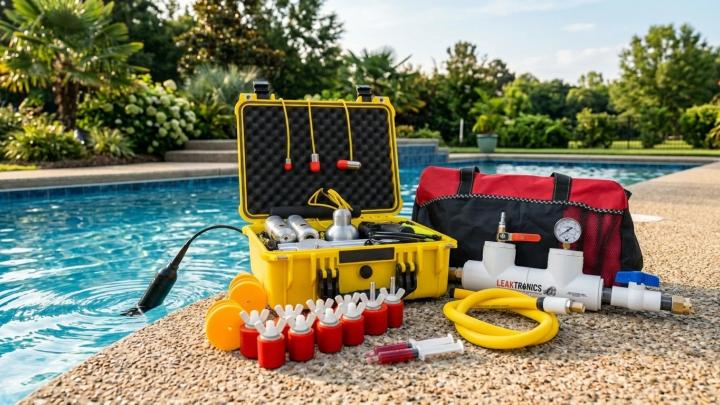
Professional detection uses two key leak detection methods. The first is electronic listening. Our LeakTronics hydrophone gear picks up the sound of water escaping through a pool shell crack or a fitting gap. The second is pressure testing. We isolate and test the suspect plumbing line. This pinpoints the exact pipe and section that has failed, no digging needed.
Our Pool Leak Detection and Repair Process
We do not guess. We follow a proven process to find and fix every leak the right way.
- Step 1: Pre-inspection of the pool area, deck, and equipment pad.
- Step 2: Pressure testing of suspect plumbing lines, one at a time, when required.
- Step 3: Electronic shell scanning across walls, floor, and benches.
- Step 4: Fitting check at every skimmer, return, main drain, and pool light.
- Step 5: 24-hour digital report with photos, leak location, and repair cost.
- Step 6: Pool leak repairs using methods like Torque Lock staples and Pipepoxy trenchless pipe repair.
Most jobs are done in two to three hours. Your pool stays full. Your yard stays whole. Need related help? We also offer annual pool inspections and full pool repair services across the Columbus metro.
Why Columbus Homeowners Choose Level Up Leak Detection
Level Up Leak Detection has over 30 years of hands-on work in pool leak detection and leak repair. We know what Ohio winters do to pool plumbing. We know how glacial-till clay shifts and stresses a pool structure. And we use the best gear in the business to back it all up. Here is what one of our Columbus customers had to say:
"Level Up found and fixed a leak in my pool that another company had missed. They were able to get me scheduled quickly and were flexible when I needed to make a change. The whole team was friendly, knowledgeable, and very responsive. I would highly recommend Level Up Leak Detection!"
Kelly Kranz, Columbus pool owner
For a deeper look at how to tell a real leak from normal water loss, see our guide on how to know if your pool is leaking or just evaporating. And for the bucket test in more detail, read our post on how to determine if your pool has a leak.
Ready to Find and Fix Your Columbus Pool Leak?
A leaky pool wastes water, money, and time. Do not wait until small cracks in the pool turn into a major repair or pool resurfacing job. The sooner you act, the cheaper the fix. We serve Columbus and all of Central Ohio, with same-week scheduling and a 24-hour digital report on every job.
Call Level Up Leak Detection today at (380) 220-6760, or schedule online for fast, friendly help. We will find your leak. Guaranteed.
Level Up Leak Detection Proudly serving Columbus, Dublin, Westerville, Powell, Upper Arlington, and all of Central Ohio. Phone: (380) 220-6760